

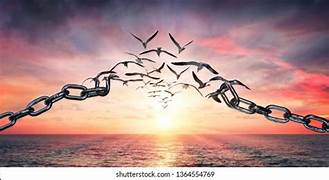
Freedom. An ubiquitous need for every living soul. It gets defined, understood, interpreted & lived in different ways And yet it is possibly THE MOST important need for all. Freedom is a nasha, an intoxication, a desire in every heart & drives most human thought & effort. Amongst all human values & aspirations Freedom is the zenith, the highest point. Like the limit in calculus, it is point which is always ahead of you, which keeps drawing you to it’s center. Freedom’s attraction is the independence it gives you to rise above your given situation & aspire to do better, & better. Ad infinitum!
Maya Angelou explains it well,” Independence is a heady draft, and if you drink it in your youth, it can have the same effect on the brain as young wine does. It does not matter that its taste is not always appealing. It is addictive and with each drink you want more.” To me Freedom & independence is always bi-directional. What you want to do. And also what you do not want to do. Both define freedom. As an HR person, I wanted to do what was best for the organization & the people I worked with. Defining those goals clearly, & working towards them gave me the strength & confidence to do what gave me joy. But by that very definition & clarity, other things fell apart. They also defined what paths I would not take, where I would not go.
In Johnson & Johnson, we decided we wanted to be a Great Place to Work. Though not the best pay-master, we wanted to create an employee experience which retained people & made them proud & committed to J&J. So that meant constant feedback from employees, understanding what they want, changing policies & practices that drove superlative employee experience. Correspondingly, that defined what we would not do. No favoritism, No personalized promotions or career plans, No personnel decisions which we could not defend with data & logic, No ethical compromises, & so on. What we stood for automatically proscribed what we would not do. On the sharp end of the business also, while we wanted sales & growth, all of it had to be driven by clean & pure business practices which would stand the scrutiny of any auditor. And our own conscience!!!
Aeons ago, Nikos Kazantzakis (you may recognize him as the author of Zorba the Greek) beautifully pronounced, ” I hope for nothing. I fear nothing. I am free”. Fundamentally, this is also the root of Gautama Buddha’s teachings. All sorrow/suffering is due to our desires, needs & wants. Rise above the desires & you are in a state of perpetual bliss, supreme freedom from wants which tie you down & desires which cause sorrow.
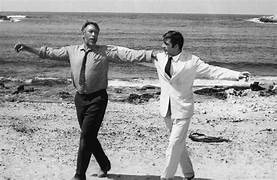
. Decluttering is about removing things we do not want. But Minimalism is discovering & being rooted in how little we actually need. When you are not hankering after worldly desires and possessions, you rise into a space of pure freedom. Kazantzakis etched a role model for all of us when he created the character of Zorba. Zorba’s love of the vast seas & fundamentally his life affirming philosophy epitomized by his dance (so beautifully brought to life by Anthony Quinn in the movie) is real freedom.
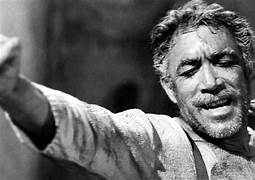
Despite problems & challenges in his life, Zorba’s determined optimism is explicitly shown to be a response to, & in defiance of, the cruelties and vicissitudes of life. In the movie, their lignite mining fails, their timber business is not successful, the whole village is against him & yet Zorba’s response is dance. The straight laced Alan Bates (Basil) asks Zorba to teach him to the siritaki dance steps. Zorba tells Basil that the one thing he (Basil) is missing is the element of ‘madness’ which enables a man to ‘break free’. The implication of “madness” being, free from circumstance, responsibility, care. The perfect translation of this madness is “Junoon” जूनून As sung by KK यारों / जीभर के जी ले पल / लगता है आज कल/ दौर अपना आएगा/ यारों जो खुद पे हो यकीन / तो ज़िन्दगी हसीं / तुझे कल बुलाएगा/ है जूनून, है जूनून सा सीने मे I Zorba movie ends with Zorba & Basil dancing with abandon & enjoying the moves of the siritaki dance…pure freedom!!!
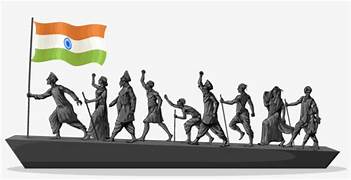
The Greek philosopher Epictetus reminds, “Is freedom anything else than the right to live as we wish? Nothing else.”. Yet Freedom in the truest sense cannot be bestowed by anyone else. It must be achieved by one’s own efforts. And once achieved there must be constant vigilance to maintain the hard earned freedom. A study of all Dictators in world history prove again & again that Freedom is never given freely by the oppressor. In the struggle to rise, the oppressor, having reached the top of the heap, loves status quo and wants to remain on top, with others following his bidding. Right from Alexander to Aurangzeb & even modern politicians all who rise to power want to stick to their power. In this context, freedom must be demanded by the oppressed. From the French Revolution to the recent developments in Pakistan all bear testimony to the fact the arbitrary rule of others does get resented & the effort is soon afoot to overthrow this yoke & gain freedom. This desire to decide one’s own destiny is true not only in public life but even in academic institutions & corporates of today. The means of protest & challenge may differ, but the effort is unequivocally towards self-determination. Look at the Organized Labor movements or today what we are seeing even amongst the learned bourgeoise, when post the work-from-home experience companies tried to get employees back to office, in a regulated working space & time. Moshe Dayan rightly called Freedom the oxygen of the soul. Remember Herbert Hoover proclamation,” Freedom is the open window through which pours the sunlight of the human spirit & of human dignity.” Indeed Freedom is as important as sunlight for growth & life itself.

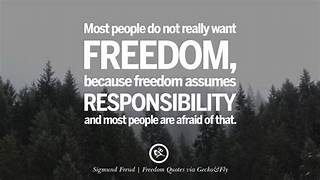
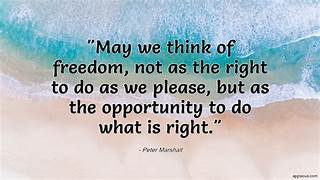
So what will you pay for Freedom? can it be measured at all? Or is it a constant sacrifice you must commit to? Freedom lies in being bold. In standing up for what one holds dear & challenging others who wish to deviate from the golden path. Freedom is indeed an uneasy crown of thorns. Challenging. Difficult. Freedom brings it own sense of duty. Freedom is not just doing what you want, but it should be seen as a responsibility. A serious responsibility to do what is right, & hold others also accountable to that higher contribution. Liberty and Freedom , when they begin to take root, are plants of rapid growth. As Dalai Lama said, “ Brute force, no matter how strongly applied, can never subdue the basic human desire for freedom.” Question is, are we ready to walk that path firmly and with conviction?
Let me end with Noam Chomsky’s question for all of us. “If you assume that there is an instinct for freedom, there are opportunities to change things, there’s a chance you may contribute to making a better world. The choice is yours.”
so tell me, where do you stand? vikas
 Vikasblog