
Have you ever wondered why some are “scaredy cats” while others are open to any new experiences/situations? In fact, some will actively seek out haunted houses & streets : will be more than happy to go & stay to tempt the ghost to show itself. There is a certain populace which laps up horror movies & then there are others who would not be ready to watch a horror movie at all. A Dr friend of mine talked to me about intergenerational trauma. When I read about this concept a lot of things made sense. Hence this blog.

My close friend & partner was brought up in Hazaribagh. His father was a senior, respected official in DVC. Everyone knew him & his family. So the only safe place as a school kid to smoke cigarettes (away from eyes of all) was the Christian Cemetery, as no one would go there. So the motley group of school friends would go in the evening to the burial grounds, sit on graves, resting against the tomb-stones, & smoke their cigarettes. Contrast this with me who was born & brought up in cities, dreaded the dark, & was scared to even go to the toilet in the night in our village, because the toilet was located a good 5 mins walk from the house. The lantern in hand was not enough solace. Pitch darkness all around, rustling trees, shadows & shades which looked like warriors or goblins out to swallow me!! I always woke up a cousin or an uncle asking them to accompany me to the toilet. Safety in numbers, if the ghost does turn up!!!
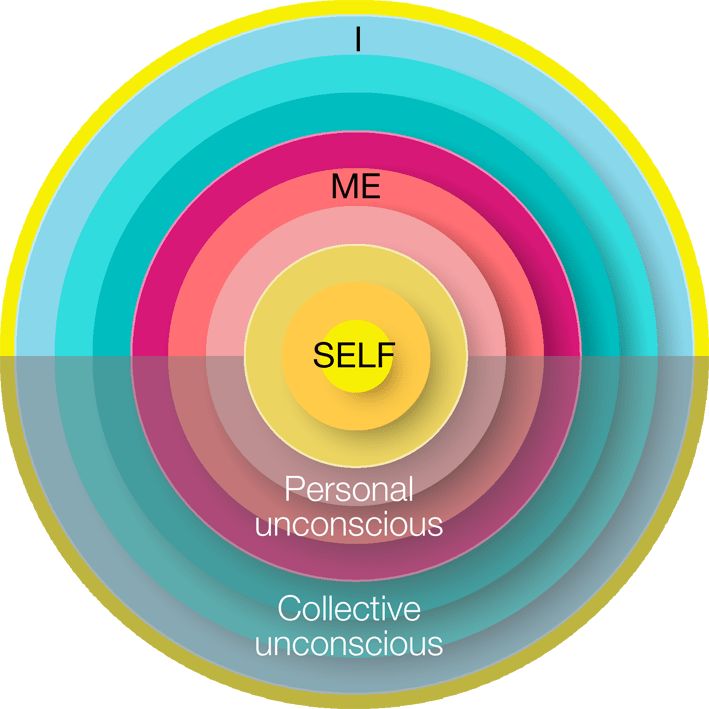
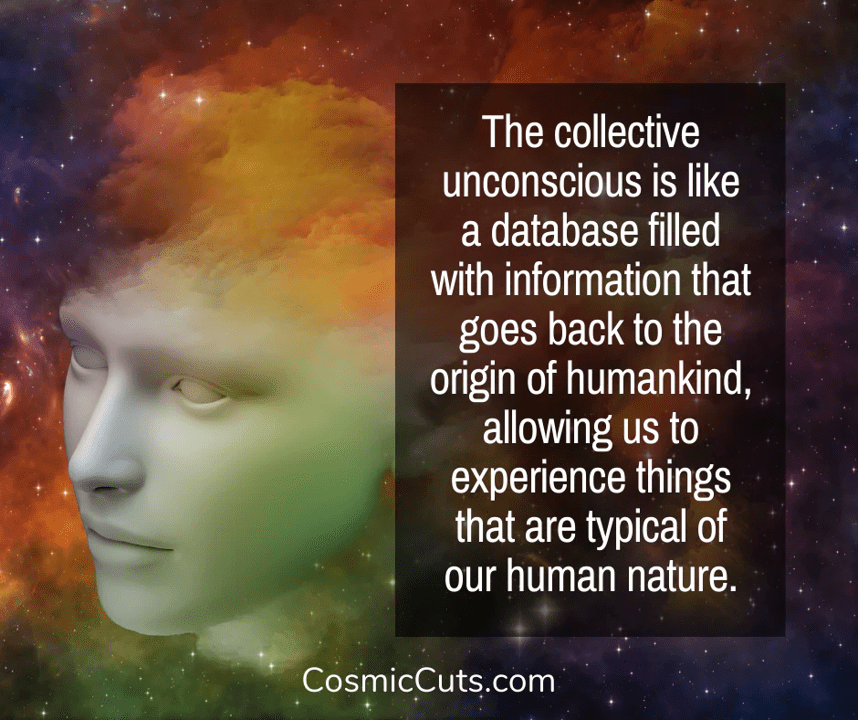
One has often wondered why the most gullible people for ghosts, sightings and apparitions are Keralites and the Konkanis. Every Keralite has a ghost story in his personal repertoire!! Every Konkani has seen a white clothed figure on dark nights in the ghats, who suddenly disappeared!! And these stories are repeated often to pass into folk-lore. Nor are these isolated experiences. In India all the 27 states (& some with even sub-divisions) each have their own separate “brand”. Each has unique characteristics, language & stories shaping thinking & behaviors of their people, often distinctly different from their neighbors. What is creating this? Is it their food? their dress? their upbringing? The culture shaped for each state/region is really the “collective unconscious” which psychologist Jung talked of way back in 1916. The collective unconscious has a profound influence on the lives of the individuals & shapes their experiences & perceptions. Unconscious is that part of the mind containing memories & impulses of which the individual is not aware. Some of this may be common to mankind as a whole & originating in the inherited structure of the brain. It is distinct from the personal unconscious, which arises from the experiences of the individual. Per Jung, the collective unconscious contains universal primordial images & ideas.

Relatedly, psychology is now talking of Transgenerational or intergenerational trauma. This refers to the idea that traumatic experiences & their effects can be passed down from one generation to the next, influencing the lives of family members, communities, or even entire cultures. So the genesis of my fears & anxieties may well be beyond me. Remember Abhimanyu learning of Chakravyuha while in his mother’s womb. We hear of children born with memories of past lives, where they stayed earlier & their earlier dramatis personae. If you & I think closely we will accept that many of our thoughts & feelings are shaped not by our individual experiences but by something larger than us…the collective unconscious. Transgenerational Trauma is an outcome of this.
Think back to the times when the caste system was strongly followed in India. Wells for the shudras were different. Shadow of the lower caste person could not fall on a Bramhim. Living in such conditions for generations, would that not influence the psyche of the people?? Even when such practices are history, the impact & influence of this would still remain in the psycho-social space of the present generations!! Very comparable to the generations of slavery & ill treatment of the Blacks in USA. All subsequent affirmative action would not wipe the slate clean….either for the Whites or for the Blacks. See the angst felt by teenaged SC/ST people in India for whom the repression & ill-treatment may only be part of folk-lore. What part of the mental make up of the Adivasis in Koraput region in Odissa (or the Gonds & Bhils of MP & Maharashtra) still has roots in the generations of deprivation & discrimination they endured, is a moot point. Also recollect the local Rajahs & the Zamindars exercising total control on their “praja” for generations. That shaped people. The primordial conditioning & the environment shaped lives & thinking in toto. So, we need to acknowledge trans or intergenerational influences are real.
To understand Transgenerational Trauma we should understand the following aspects:
- Inherited trauma: Traumatic experiences are not only experienced by the individual but also affect their descendants. Classic example is the abject acceptance of the zamindar/Raja’s diktat even if detrimental to personal interests.
- Epigenetic transmission: Trauma can alter gene expression, leading to changes in physical & mental health that are passed down through generations. This may require clinical studies to assess impact. But eg in US Blacks & Hispanics consistently score lower on an average on intelligence tests, earn on an average much lower than Whites, are all data pointing in this direction. Similar situation prevails for SC/ST in India.
- Cultural & social transmission: Trauma is transmitted through stories, behaviors, & cultural practices. This is easily seen around us, as we still live in a tradition-bound, hierarchical society. The Khap tradition in Haryana & UP where sadly even today people do not think twice to kill couples who marry against the caste tradition. Despite all social propaganda, this is still predominantly considered the “right” thing to do due to the trans-generational unconscious.
- Emotional & psychological legacy: Unresolved trauma can shape family dynamics, relationships, & individual identities. Again we all have examples of brothers becoming enemies of brothers. This divide draws strong lines across generations. People may not know the cause or rationale but still are affected.
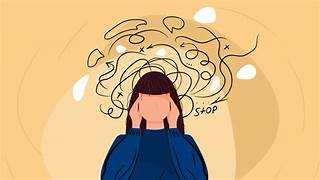
Other notable examples underlining prevalence of transgenerational trauma are:
- Holocaust survivors’ children and grandchildren experiencing anxiety, depression, or PTSD.
- Indigenous communities’ historical trauma from colonization, forced assimilation, & violence affecting current mental health. Most studied examples being the Red Indians in America & the Aboriginals in Australia
- Many families’ transgenerational trauma from slavery, segregation, and systemic racism.
- Refugees’ experiences of war, displacement, & loss impacting their children’s well-being eg partition of 1947 & it’s aftermath
- The aftermath of dropping the Nuclear bomb in Hiroshima & Nagasaki which created both physical abnormalities & psychological trauma for millions of Japanese, which is being handled even today.
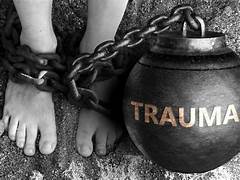
The observed effects of Transgenerational trauma include:
- Anxiety, depression, PTSD, & other mental health issues.
- Substance abuse & addiction.
- Relationship difficulties & attachment issues.
- Physical health problems (e.g., chronic pain, autoimmune disorders).
- Identity formation & self-esteem challenges.
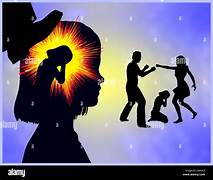
So how does one break the cycle? Research shows that the following steps help contain, if not totally overcome the trauma
- Acknowledge & validate the trauma.
- Seek professional help (therapy, counseling).
- Practice self-care & stress management.
- Foster open communication within families.
- Engage in cultural & community healing practices.
Recognizing transgenerational trauma can help individuals & families to understand their experiences in context. This in turn will help develop empathy & compassion, enabling one to break free from cycles of pain. In the long run, this will heal & build resilience.
Hope this blog helps better understanding of intergenerational trauma & aids finding solutions: vikas

PS : This blog is heavy. I have tried to put as many examples as I could, to bring this concept to life. Our Healing & Health will depend on understanding transgenerational trauma and actions to overcome its effects
 Vikasblog