

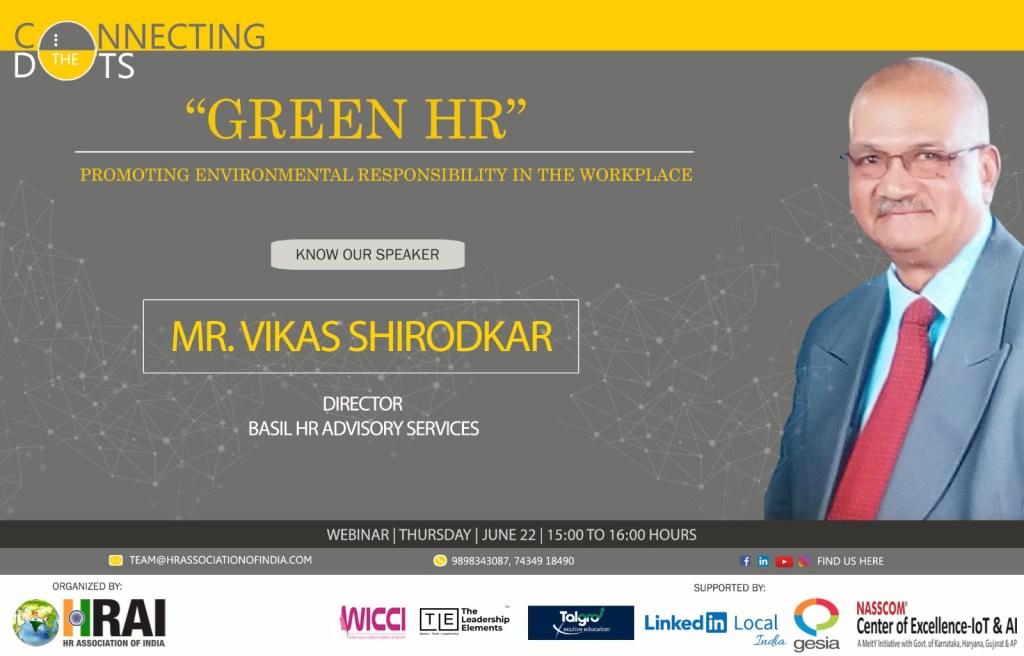
HRAI (HR Association of India) recently asked me to be in a panel discussion on Green HR. HRAI is led by some enthusiastic, young HR professionals. So when they reach out, I always agree. But one peculiar characteristic of HRAI is that they first sign you up for a talk/panel discussion & only much later, after you have accepted, they inform you the topic. Sometimes this can be disconcerting, as it was this time. On my own, I would never have said yes, to such a topic. Green HR?? What is that? Have I done anything in this area in my 40+ years of experience? Will I be able to add value to the listeners? Will my co panelists take me for a fool? ( which I am of course: but why make it public?)

Total self doubt clouded my mind. ( Sotto Voce: those who know me will tell you that is my तकले आम…. my signature tune… faced with anything new. I am a follower of Napoleon in that regard who advised : Train Hard, Fight Easy!!) so then I thought, I can prepare myself for the topic & that is what I did. With homework done, on that fateful day, I was confident & prepared. Though I am saying it myself, I think I was the best speaker on the topic that day. This was validated by many who attended the Panel Discussion & spoke to me after the event. Having done all the prep, I thought why let it go waste? Why not capture my thoughts in a blog, so that I can reach a wider audience? so here goes…hope this adds value to you, my readers.

So what is Green HR? The simple way to understand this is to ensure that every HR touchpoint must promote sustainable practices and increase the employee awareness on issues of sustainability. There is no gainsaying the importance of sustainability in today’s world. So this is HR taking an evangelist role for making sustainability top of the mind, through spreading awareness & engaging all employees in this important task. De facto, HR has to expand its traditional role to emerge as the chief supporter for the organization’s pursuit of sustainability. The first step in this journey is for HR to ensure that “environmental responsibility” becomes an integral part of the corporate mission statement. This will ensure that 1) it remains top-of-the-mind in all organizational initiatives & 2) it gets tracked regularly by the management for fulfilment. HR plays a key role by working towards participation of all organization members to create & keep the organization green.
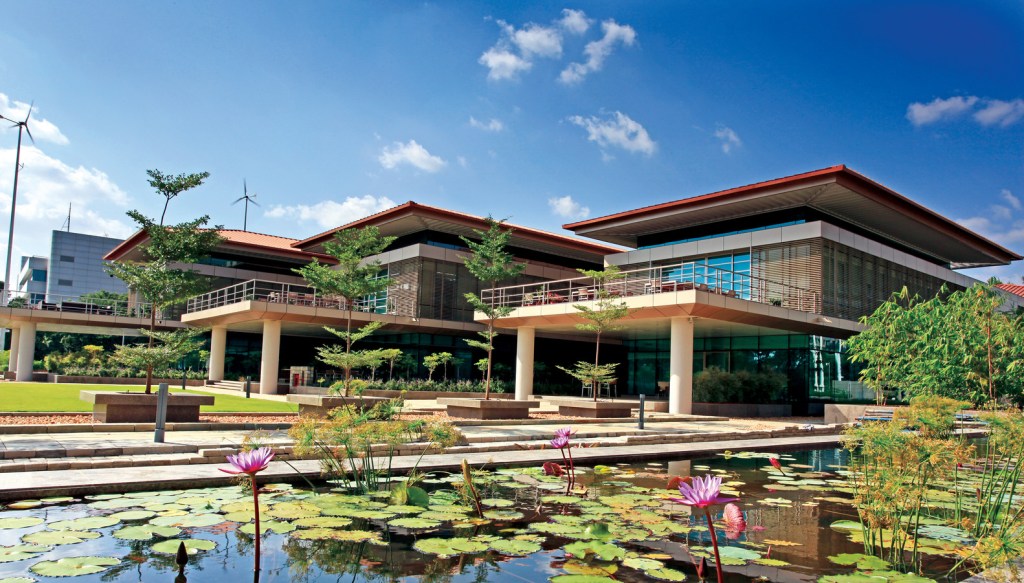
In a way this is not a new concept. Green HR is not New Wine in Old Bottle; it is a NEW WINE in NEW BOTTLE. For long, organizations have been socially responsible to reduce the environmental impact of it’s operations. A path-breaking example would be Tushar Tanti building a totally Green Corporate HQ way back in 2009. A million square-feet of ground plus two levels in a 10.4 acre urban setting achieved a LEED (Leadership in Energy and Environmental Design) Platinum & Teri Griha 5 Star certification, with its annual energy generated on-site through photovoltaic panels and windmills. No other buildings have achieved this kind of cost efficiency. 92 % (4 MW) being consumed by the project is ‘sustainable energy’ making this a Zero Energy Project!
The refrain ,” Do not print this mail, unless absolutely necessary” was a green initiative ages ago. Relocation of factories from cities to remote locations were the sustainability governmental regulations willingly followed by companies like Asian Paints, Cadbury & J&J. The focus on energy usage & efforts to drive down consumption was not only economic need but also a green initiative. Alternate sources of energy championed by Thermax helped corporates to walk this path. Recycling and Waste Disposal in an environmental sensitive way, reducing water consumption and ensuring zero discharge plants achieved by Mahindra & Mahindra in their plants all show us the way. All such initiatives help achieve the Triple P objective: People; Profit & Planet!!! Following such Green HR practices, organizations can save money and at the same time reduce the carbon footprint to further sustainability goals.
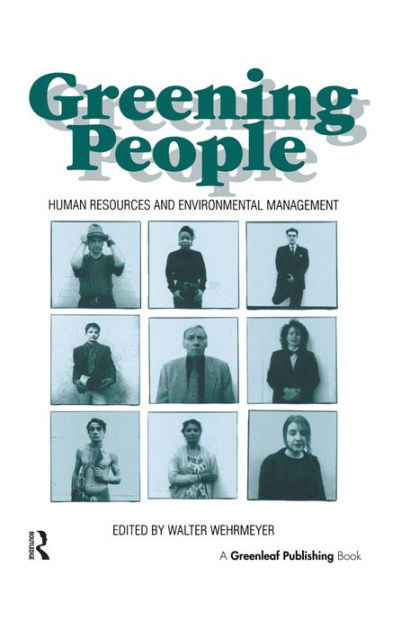
The word Green HR also has long legacy. It was way back in 1996, Walter Wehrmeyer in his book aptly entitled “Greening People” first talked of Green HR viz. joint focus of sustainable use of resources and preserving the natural resources.
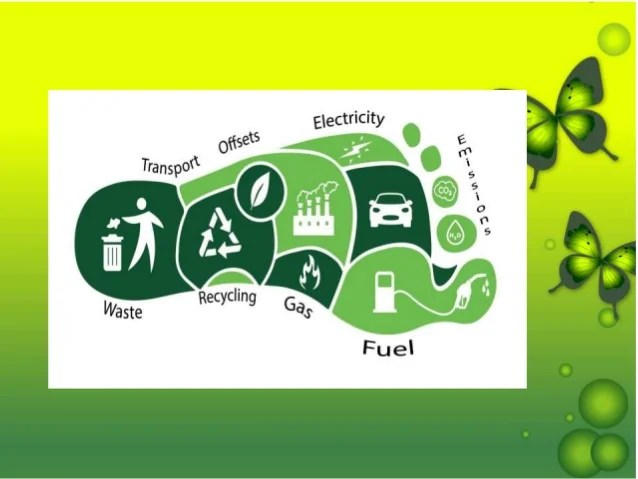
A host of practices have steadily grown up under this head of Green HR: Going Paperless; Energy Audits & action plans; Using Recycled Materials in offices and shopfloors; Walking, Cycling, Car Pools to reach workplace; Bring your Own Mug for coffee at office reducing plastic/paper/washing requirements; Flexible Work arrangements as we all experienced during Covid; Reducing Travel; Recruitment & Selection online; On Boarding, L&D and PMS online, Procurement only from Vendors who are into recycling… these are just a few examples which people are experimenting with. Setting up Employee Committees to generate more such ideas helps new thinking and also ensures involvement & buy-in of employees.
Such greening of policies & practices has significant benefits. To name a few obvious ones: Improved Communication & Collaboration; Increased Employee Engagement; Reduced Costs; Reduction in Carbon Footprint; & Reduced Costs of Operations. In India many organizations already have enacted such policies and are following such practices to reap business benefits. Notable amongst the early movers are: HCL Tech.; Idea Cellular; ITC; IndusInd Bank; Tamil Nadu Newsprint & Paper; Wipro; Suzlon; ONGC; & TCS , to name a few

Clearly this is an idea whose time has come. So implement for your organization & start reaping the benefits. And to my younger HR brethren: you are always looking for ways in which to move closer to the line of business in your company & to add value & make an impact:- Green HR is the way to go. You will become an important driver of business , cost and sustainability agenda creating a niche for yourself and ensuring a place on the strategy table.
Travel this interesting path to a greener future for yourself and your organization: vikas
PS: Remembering the song penned by the Bard (As You Like It):
Under the greenwood tree
Who loves to lie with me,
And turn his merry note
Unto the sweet bird’s throat,
Come hither, come hither, come hither:
Here shall he see
No enemy

 Vikasblog