

Delegation is not about getting rid of tasks; it’s about empowering others to help you achieve your goals.” -Laura Stack To delegate OR not to delegate: That is the Question?
Today’s organizations are all about team working & interdependence. And yet, some managers end up working alone when it’s time to collaborate with their teams? I believe the primary reason is insufficient delegation skills. Poor delegation shows itself as micromanagement, inconsistent deliverables, poor communication, & other unfavorable outcomes. Understandably, improving delegation skills is crucial for managers to enhance organizational effectiveness.

A study by HBS examined the role of delegation. They found that delegation enables subordinates to exercise self-direction & control, providing employees with meaning, perceptions of self-efficacy & self-determination, & the feeling that they make an impact. All these are key ingredients of empowerment. (https://online.hbs.edu/blog/post/how-to-delegate-effectively)
Why Delegation ?
Delegation is a critical skill for managers to master. This allows managers to utilize their team’s strengths & increase productivity. It allows them to get more done through their people & leads to higher output from the team & success for the organization.
When a manager can delegate work effectively, organizational stakeholders praise the manager for getting the best out of the team. Higher-level managers take note of this manager’s ability to run a productive unit & consider them for higher levels of management responsibility. Conversely, when a manager cannot delegate work effectively, organizational stakeholders criticize them for the inability to use their human resources effectively . Doing tasks that others should be doing or leading a team who are under-utilizing people resources is frustrating. I am sure all practicing managers have personal experience of this.
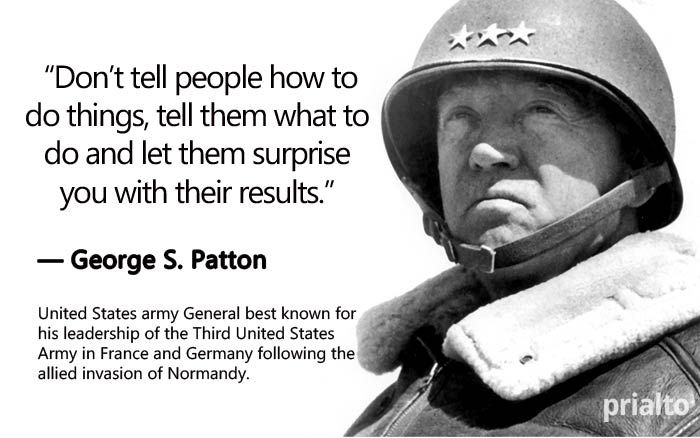
What Makes Delegation Difficult?
Delegation makes us feel that we are giving away control of our projects. Our emotions, passion for the project, limiting beliefs & our judgment of the other person comes into play. In delegation, remember we can delegate the task or execution, but never the responsibility for the task completion. Best example is of working parents who delegate child care to a nurse or relatives, but the responsibility for the child’s upbringing remains with them.
Why do Managers fail at Delegation? Getting over barriers to delegation, requires some emotional intelligence & personal development. It requires taking a good look at ourselves & evaluating how we are dealing with the -1. Fear of Failure When handled correctly, mistakes can serve as valuable learning experiences to enhance performance, foster innovation, & refine operations. Through sufficient development & trust-building, team members are more likely to rise to the occasion rather than falter. Remember the Pygmalion Effect!!
2. Envy of Your Staff Member’s Ability If you feel a tinge of envy towards a particularly talented staff member whose skills surpass your own in certain areas, it’s important to address these feelings internally. Once you’ve intelligently managed your negative emotions, empower your skilled staff member to shine in their strengths. Their success ultimately reflects on you as a leader who harnesses talents of their team.
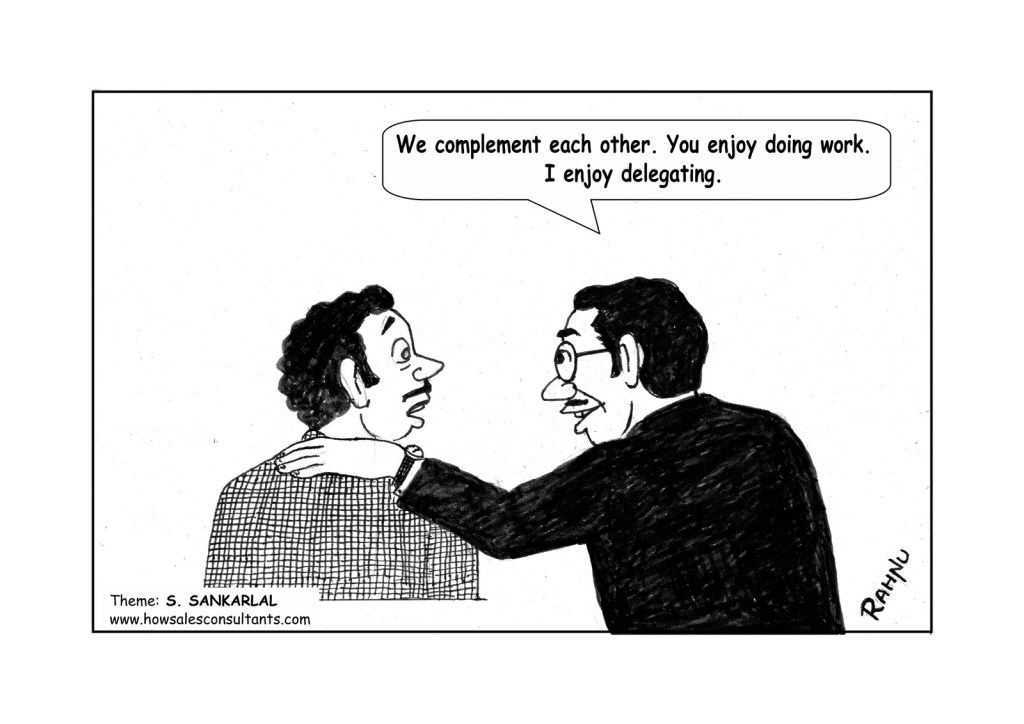
I once had a boss, who used to continuously deride & pull me down. I realized it was envy. So one day I sat down with him & openly told him, ” Sir I am not in competition with you. You are my boss & will remain so. My success will be counted as your team’s success” To his credit, our work relationship changed.
3. Can Do It Better Myself! Of course you can! Your technical proficiency has played a pivotal role in your success. Reframe the question: “Is it more beneficial for me to handle this task myself or delegate it to someone else?” “Delegation is not a sign of weakness, but of strength.” – Steve Jobs. Tasks don’t have to be executed exactly as you would. Prioritize empowering your team rather than being overly involved in every task. I have always propagated that only a confident man, can delegate. The insecure will keep cards close to their chests & never delegate.

4. Like To Do This Myself! Principles of delegation emphasize that managers should delegate tasks that others can effectively handle. Whatever our job description, we all spend max time in areas which we enjoy working on. Learn quickly that your focus must be on managerial tasks that only you can handle. My public pronouncement in my team always was, “I have no quarrel with people who want to do my job. Pl come forward & take over. I will find something else to do!!! Both of us will be happy”
5. Better Not Give Him Too Much Authority or I Will Lose Control Effective delegation requires you to identify who possesses the right attitude & skill level Then grant them the authority to carry out the task. By delegating you are not losing control but you are adding a new skill to your skillset. It will allow you to create the space for deeper, strategic work. Moreover you are creating your replacement so that you can move elsewhere. I take great pride in the fact that I can count nearly 20 people who worked with me & are now heads of HR in different organizations. Some have risen well above my highest level. Even now, years after our official relationship ended, they insist on calling me Boss. When I challenge them, their answer is, ” we are only doing what you taught us to do: so you will always be my Boss”
Effective delegation strategies for managers:

- Play to your employees’ strengths & goals: Assign tasks that align with your team members’ strengths and career goals, increasing their engagement and motivation.
- Define the desired outcome: Communicate the expected outcome of the delegated task to ensure everyone is on the same page.
- Provide the right resources & support: Ensure team members have the necessary resources, training, & guidance to complete the delegated tasks successfully. That is your PRIME responsibility.
- Overcome common barriers: Address obstacles such as fear of failure, envy of employees’ abilities, and believing you can do it better yourself.
- Express appreciation and provide feedback: Show gratitude for your team members’ efforts and provide constructive feedback to help them grow and improve.
- Monitor progress and results: Regularly check on the progress of delegated tasks & provide support as needed. Evaluate the results & outcomes to identify areas for improvement. Remember, What gets measured, Gets done!.
- Delegate in stages: If you’re concerned about losing control or authority, start by delegating smaller tasks & gradually increase the responsibility as team members gain confidence & experience. And you learn the game!!
- Train employees adequately: Ensure your team members are well-prepared for delegated responsibilities by providing adequate training & support.

Let me end with a personal example of a Guru & Master I met on my journey. I was a training & development person with some skill in Recruitment first 2.5 years of my career. I was transferred to Corporate Industrial Relations to assist Arun Bhende. Within 2 months of working with him, when he taught me the ropes of Labor Laws and Drafting, we had a strike situation in one of the plants, Bhende told me to go & handle it alone. I was aghast!! Here was a rookie in IR, never worked in a plant or with blue collar employees, being asked to handle a strike. Scared to the core, I expressed my reservations. Supremely confident Bhende’s one line brief was, “Vikas, go to Nashik and do what you think is right. Industrial Relations is practical wisdom. You cannot go wrong. And if you do goof up, tell people you had consulted Bhende & he told you to do that. Don’t worry, I will back you up whatever it is”. I learnt Delegation from that one incident And all my life I have been indebted to that Maharao for the baptism by fire.
Remember Delegation helps you grow & helps your team grow too ; fusion of स्वार्थ & परमार्थ ; try it: vikas

 Vikasblog