

We all have heard & even used this phrase many times. But do we really mean it? are we ready to go to any extent to achieve a goal? are we ready to pay any price? are we so driven that we genuinely feel the benefit far outweighs the effort; & so we are ready to acquire/achieve something at any cost? Does the End indeed justify any Means? Genuine dilemma from times immemorial. Jim Rohn warns, Count the cost first. Don’t pay too big a price for minor values.
The phrase At Any Cost is widely attributed to Machiavelli’s The Prince, which does reflect this philosophy but does not use the phrase in this wording. A possible source is Ovid‘s Heroides (ca. 10 BC), which says exitus ācta probat (“the outcome justifies the deeds”). This got me thinking about when, if ever, I have felt I must achieve something at any cost. The pragmatist in me always cautions, is it really worth the effort? What will be the benefit? or the opportunity cost if I do not achieve? Remember Goddard’s exposition: The reason many people fail is not for the lack of vision but for lack resolve and lack of resolve is born out of counting the cost.

It cannot be gainsaid that every achievement requires you to invest, time money or effort, to achieve the outcome. Corollary: there is no free lunch, only focused efforts will prime you to achieve your goal. Think about how many mountaineers have died in their effort to reach the top of the Everest. Even Sir Hillary & Tenzing Norgay made multiple attempts & risked their life & limb before their attempt in 1953 was successful. The Expedition which succeeded was the 9th British Expedition to scale Everest. The Nepali people believe Chomolungma or Sagarmatha ( local names for Everest) has to call you. You do not climb the mountain: the Mountain calls you to climb. So really think about it: who is paying the cost here?
Most experiments are designed to be done quickly. Get data, analyze data, publish data, move on. But the universe does not always work on nice brief timescales. For some things you need time. Lots of time. The longest experiment known as the BROADBALK EXPERIMENT is going on for a whopping 181+ years. In 1842, John Bennet Lawes patented his method for making superphosphate (a common, synthetic plant nutrient) and opened up the first artificial fertilizer factory in the world. The following year, Lawes and chemist Joseph Henry Gilbert began a series of experiments comparing the effects of organic & inorganic fertilizers, which are now the oldest agricultural studies on Earth. For over 150 years parts of a field of winter wheat have received either manure, artificial fertilizer, or no fertilizer. The results are just what you’d expect: artificial & natural fertilized plots produce around six to seven tons of grain per hectare, while the unfertilized plot produces around one ton of grain per hectare. They can use these studies to test everything from herbicides to soil microbes & even figure out oxygen ratios for better reconstruction of paleoclimates. At what cost knowledge? At what investment of time?

We mortals do not have the luxury of time & resources to learn. But we also have the experience that shortcuts often result in more frustration and bad conclusions. Prior to the days of Google maps, I recollect a trip we made to Matheran, while in college. Going up to the hill station we took the toy train. The terrain & gradient looked so easy that while coming down, a few of us decided to walk downhill. As we climbed down, someone suggested a short cut, No prizes for guessing, we got lost!! It was becoming dark. We were surrounded by thick forestation and we did not know where to go. After wandering around in circles, for a couple of hours, we were fortunate to meet a local who guided & helped us reach the railway station below, just in time to catch the last outgoing train to Mumbai, to the relief of all. The “short cut” proved to be a long cut indeed. I am sure we all have had such experiences where we were so focused on the result at any cost, and gave a go-by to the process leading to more time, effort, cost and frustration.
I believe the “at any cost” thinking typically happens at the start of a project, when time appears plenty, and dead-lines are not looming large. There is a hidden romanticism underlying the bravado of “at any cost” thinking. You wrongly assume that your sincerity & hard work will dissolve all obstacles & the win will be yours. But if you just take a deep breath & re-think, really “at any cost” is just a chimera. In practical life you can never justify results “at any cost”. Even wars, to say nothing of commercial endeavors, have to be justified on cost-benefit ratios. America stopped it’s involvement in Vietnam, when the body count rose & the people started questioning the administration. Look at Hitler. After having practically over-run entire Europe, his megalomaniac thinking made him lose sight of the negatives in opening up Russian Front. And putting his resources in, at a time when the severe winter of Russia was setting in. He could not manage the logistics of men, material & food movement eventually costing him his World Ruler ambition. So Russia campaign at what cost? Similar story played out with our own Indira Gandhi. From a seemingly unassailable position of virtual dictatorship, things quickly folded up all around her, eventually divesting her of her powerful advantage. The Congress Party has never been able to regain it’s glorious position ever again. What cost Congress & the Gandhi family has paid? and is still paying?? Remember James Blaine who gained the 1884 Republican nomination for US Presidency on his third attempt: “Another victory like this and all our money’s gone!”
Maybe you will call me a compromiser, but in my life I have studiously stayed away from the “at any cost” thinking Projects are important. Results are important. But the cost benefit equilibrium has to be maintained. A boss taught me early in life….pull the rubber band but keep an eye on it’s elasticity. Do not pull so much that the rubber band breaks!! For win win solutions, never make it an ego issue, “at any cost” type of thinking. Learn to let go, compromise. Be ready to settle for less today, But invest in a relationship where you will be helped in the long run. What you lose on the swings, try and recover on the round-abouts.
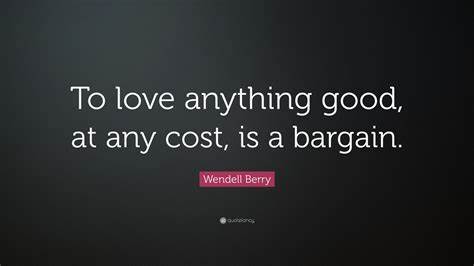
At any cost thinking is about pulverizing the alternative, keeping all the brownie points to your self. But that does not help in the long run. Win Win thinking is not about pyrrhic victories. rather it is accepting the cost benefits not only of your side, but also of the other side. That is why a company like Johnson & Johnson says it openly in it’s Credo….Suppliers and Vendors must have an opportunity to make a fair profit. For your own success these vendors and suppliers must remain in business so that they can contribute to your business success in the long run. At any Cost thinking is focused on immediate & short run wins, But life is about playing for the long term. Winning in long term requires a wider perspective than that reflected by the “at any cost” egoticism. we would do well to remember the warning of Tsem Tulku, Zen Teacher, ” Next time you are faced with a challenge, remember the cost of success is far cheaper than the price of failure”.
Remember James Blaine and his comment: “Another victory like this and all our money’s gone!” So I end by remembering and reminding my readers of King Pyrrhus of Epirus whose army suffered irreplaceable casualties in defeating the Romans during the Pyrrhic War. After the latter battle, King Pyrrhus commented when his generals complimented him for winning the war,” One other such victory would utterly undo us” The mood is similar to that expressed by Arjuna to Krishna on the last day of Mahabharata war as they viewed the battlefield strewn with dead bodies of friends & foes. Victory at what cost?
I echo Madgulkar who sings in Geet Ramayan: “
दैवजात दुः खें भरतां दोष ना कुणाचा
पराधीन आहे जगतीं पुत्र मानवाचI
{ Destiny is riddled with Sorrow, Oh Bharta, and no one is to blame
In the World, the Son of Man is Subjugated & in Chains}
So choose wisely. Can one really afford, at any cost? asks vikas
































 Vikasblog