C’est exclusif

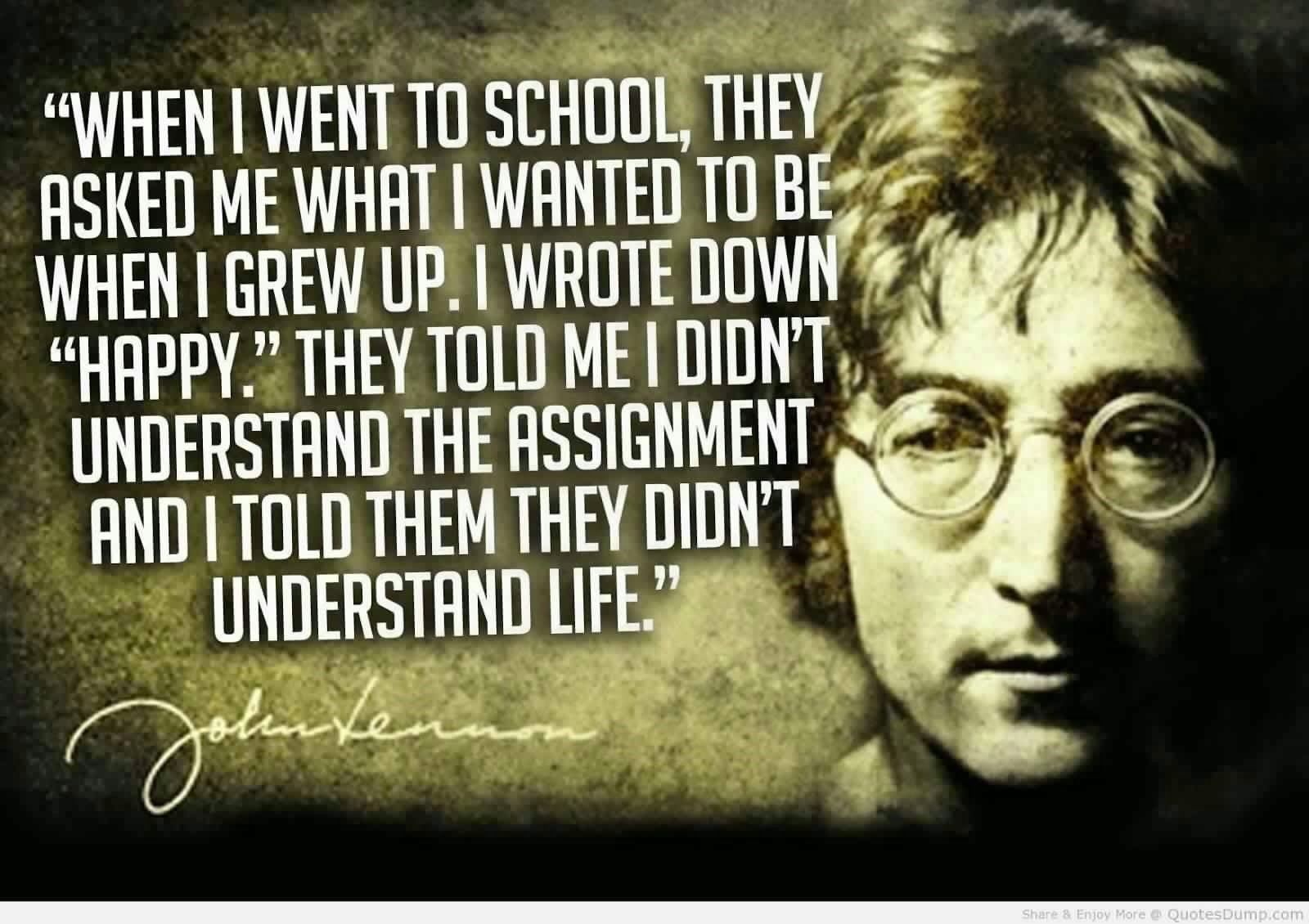
As a lifelong student of human behavior, I am perpetually intrigued, and alternately saddened to see absolutely average (and significantly normal) people put on airs of exclusivity. They project a manner emulating “to the manor born”. They want to prove to their audience, and indirectly to their own selves, that they are special! Their effort is to project themselves as better than they are, above their “level”, superior!!! Often this attempt is farcical and immediately seen through by the audience they try to impress. And thus, they end up coming across lower in the eyes of the beholder.

The simplest example is the people who try to put on an accent. I do not mean the Punjus who want to speak “English” after a drink or two; but rather, the seemingly normal folks who suddenly speak different, when they are in front of an audience or when they are on phone. We all know some folks whose vocabulary or diction changes when they are in the public eye. This desire to project exclusivity is, in my opinion, deep rooted and widely prevalent in today’s times, when supplements like Bombay Times are read more assiduously than the main TOI newspaper, when Page 3 overtakes all!!

Historically of course this disease is old as the hills. There is an apocryphal story about the first English settlers to America on the boat Mayflower. Apparently the people on the boat were so status conscious that it was said “The Cabots spoke only to the Lodges; and the Lodges spoke only to God!”  Heaven help some of the hoi polloi who tried to interact socially with the Cabots and the Lodges!! In social dos today we all see such behavior. There are those who would desperately try and enter conversations with the movers and shakers: getting badly mauled in the process. Yet they would steadfastly ignore some others, seemingly below their level, who were trying equally hard to converse with them. What creates this social pecking order? Who makes these hierarchies? Is it not the innate desire to be exclusive?

Those of us who have had the fortune of working in MNCs have seen the deference with which even mechanics and technicians are treated just because they are German or American: while we gleefully ignore our own brown skinned brethren. Correspondingly the technicians belonging to “Vaterland” will look down on even General Managers of the host country merely because they are from the HQ country.  Those of us who had had the misfortune of travelling to Europe have experienced first hand the twisted egotism of the French who would disdainfully look down on anyone who dares speak in Queen’s English in their hallowed land. Their attitude is speak French or be damned. C’est exclusif!

One expects religion to be the most inclusive, and the least exclusive. But is that the reality we see reflected all around? Rather, in the name of religion, we see the most deep lines drawn between people. While all accept that at the fundamental level all religions teach love and brotherhood, it is in the name of the selfsame religion that we see maximum groupism and claims of exclusivity. We have forgotten Thomas Keller who avers ” The Gospel is an exclusive truth but it’s the most inclusive exclusive truth in the world”. We had  first Protestants who claimed Roman Catholics had lost the plot. And then came a bevy of Lutherans, Orthodox, Pentacostal, and many other variations: all claiming exclusive knowledge and grasp of the Good Word. We forgot Prophet Mohammed’s teaching :  there are multiple ways to reach the Allah. Rather in Goa we keep debating Shiva or Vishnu : who is Supreme? Do the Shwetambers have the right path or is it the Digambars?  Nirgun or Sagun : both claim they define Godhood better.

All this debate and claims lead to David Mitchell’s insight:  ” Faith, the least exclusive club, has the craftiest doorman. Every time I have stepped through it’s wide open doorway, I find myself stepping out in the streets again.”  The desire to be exclusive finally ends by showing us how non-inclusive we become. The Gods look down in pleasure on repentant sinners as ” it isn’t what we say or think that defines us but what we do” per Jane Austen (Sense & Sensibility).

Have you not seen people who wear their educational qualifications and alma mater as plumes on their head? They just cannot forget they are from IITs or IIMs or have a PhD and all their interactions are through this looking glass. They distance themselves from others, casting a long shadow of exclusivity. The qualification, college or “club tie” becomes their ‘nom de plume’; a high gate they erect to keep the “aam janata” in their place. But actually they end up as prisoners in their own fence!!! As Theodore Adorno put it “the specific is not exclusive : it lacks the aspiration to totality”. And the real world is glorious and entertaining only because of it’s rich diversity. Which in turn, can be understood  and enjoyed only if one is inclusive.

Are you only the IIM or PhD? Or are you wider and deeper than that? “To use for our exclusive benefit what is not ours is theft” warns Jose Marti. I was a Bombay University topper in BA and in MA. I had the privilege of studying in IIMC. So what? I always hid it as I reminded myself that every year there is topper in BA and one in MA. Hundreds study every year in premier colleges. But that does not define me. If it distances me from others: I would rather hide the Gold Medals I won, and not use them as the proverbial “third eye” of Shiva to judge and evaluate and destroy others.

In today’s times we can learn a lot from the entire journey of the LGBT community to get their rightful place under the sun. Stuart Milk a LGBT activist puts it brilliantly: “We are less when we do not include everyone”. Elsewhere our own Bapu cautions: “No culture can live if it attempts to be exclusive”.  So ubiquity is the new exclusivity. And the faster we understand this, the better human beings we will become. ” I am large. I contain multitudes” as Walt Whitman sang. To which I will only add what Sant Chokhamela  taught me :

उंबरठ्यासी  कैसे शिऊ आम्ही जातिहीन
रूप तुझे कैसे पाहू त्यात आम्ही लीन
पायरीशी होवू दंग गावूनी अभंग…                                                                                                                    ( I cannot come to the temple as I am an outcast:                                                                         I cannot even see your face as I am so helplessly enamored;                                                        so I will stay at the steps and sing your praises)

Don’t threaten me with love baby. Let’s us just go walking in the rain: vikas
Accessible, Affable, Amiable, & Available

A favorite nursery rhyme goes:

Higgledy Piggledy my black hen; She lays eggs for gentlemen;

Sometimes nine and sometimes ten; Higgledy Piggledy my black hen.

I am about to “clack” and “cluck” and lay one Golden Egg (not 9 or 10) for you: the formula for success, silver bullet that overcomes all, sure fire recipe for triumph!! Ladies and Gentlemen, what you need to do is simply be Accessible, Affable, Amiable and Available. And your life is made!!! Permit me to explain.

In the early school days who was your best friend? whom were you most attracted to? It was a super friendly Ajit or a Daduly (elder brother to all in school); you went towards them because they were affable, amiable, friendly. You could easily tell them what was bothering you.  Not that they had an immediate solution to your problem. But the fact that you could easily approach them and tell your woes was enough to unburden you. They were your “heroes” in school.

Take even the teachers. Whom do you remember most fondly even now? and why? It was a Somalingam (Somu, to the entire school, behind his back of course!) or Miss Nagpal or Mrs Chatterjee. Remember them? They all, without exception, were accessible and available. You could easily tell them when the boy sitting next to you forcibly took away your new color pencils or the boy seated behind enjoyed kicking you whenever teacher was not looking. Approachable and friendly have ensured their place in your memory, for life time.

Why school alone? think of your family. We have all had a Aba Mama or a Sudha Atya or a Aju dada who was, is and will ever be special. Other relatives also pampered you, yet these people had a special secret sauce which went straight for your jugular. They were always there for you. They were super affectionate. And you never hesitated telling them what you wanted. Whether it was watching Royal Circus from the first row or getting more than your share of cashewnuts and mangoes, they always made it happen. It was as though you were special in their lives, and not the other way around.

Comes the landmark of college.  Whether you were in a nerdy college like Parle or Ruparel, who made it as the President of the Students’ Union? It was Mr Charm. The guy who could be in 20 groups at one time (much before Facebook and WhatsApp) and all groups thought of him as their special friend. Affability was their middle name  and they were accessible 24*7 whenever anyone had a crisis. I talk of course of the times before the Students’ Bodies got politicized and money began talking loudly in these fora. Otherwise it was always Mr Amiable & Accessible who ruled the roost. Even in professional colleges like IIMs/XLRI/TISS, Mr Popular managed and ran all the events and the skunk-dos. And we “intellectuals” were more than happy to accept them as leaders.

Next stage: job and corporate India. In my 37 years of studying  corporate leaders, if there is one formula I have seen ALL successful leaders follow it is this simple truth : they are accessible, affable, amiable and available. I had the privilege to work under someone who was the epitome of these characteristics. I talk of course of Arun Bhende. Though from a premier institute like TISS,  intelligence was not his claim to fame. But his accessibilty and good nature ensured that when he joined Siemens, union leaders from all his previous companies still considered him as their chief adviser. He was always available to them and gave his time freely. His affable demeanor was such that besides unions, managements were also seeking his advice. And his contacts in the Government machinery meant that the third party to any industrial dispute: the Labour Commissionarate also sought him out for suggestions and guidance! (I often wondered how he kept chalk and cheese & oil and water apart!)

Professional things apart, anyone from Arun’s friend circle or acquaintances never thought twice before calling him for any problem, whatsoever!! I have seen Arun arrange buses for a union to take members on a morcha to Sachivalaya. And then telling the transport contractor not to charge as they are a union: “think of it as social service”. During the time of cooking gas shortages (none had 2 cylinders or piped gas then) I myself have been one of the many beneficiaries of getting out of turn allotment through his kind offices. Amul Butter shortage: call Arun. Party at home and you require Scotch: Arun. Hospital or school admissions were just too simple. Son needs a job: Arun. Daughter in law needs a transfer in a nationalized bank: Arun will find some contact. The day I thought he was not Arun Bhende but GOD himself was when someone called as a cat was stuck on a tree opposite his house at 4th floor level. He actually called Arun and asked what should be done. And imagine my sheer horror when Arun replies: ” Don’t worry, I know the Fire Brigade InCharge of that locality. I will ask him to send a snorkel to bring the cat down.” And all this done with a smile!! Affability, amiability, availability and accessibility personified was Arun.

I have seen this formula repeat ad infinitum. Think of your best boss : was he available to you anytime, everytime? Or was he grumpy and moody?  You will still recollect the smile which always played on this supercool boss’s face as he took things in his stride and made friends and followers, even as he solved problems.

Enough stories abound on the internet about Abdul Kalam as a boss in ISRO & DRDO. His people gave their best for him and the organization because their boss was always there for them. Think of other legendary corporate biggies: Rusi Mody, Sumant Moolgaonkar, Mr Gaitonde of Century Enka to name a few in the earlier generation. M/s Anand Mahindra, Nandan Nilekani,  Azim Premji ,  KV Kamath,  Kiran Mazumdar-Shaw,  Arundhati Bhattacharya,  Kishore Bayani. Need more names? Do you think any one of them would have been successful if they were not accessible to everyone in their team, approachable to draw out the best thoughts and plans their teams could come up with, and lead the teams with amiability and affability? A great leader is made finally by a team who give their individual best for the collective good. And that cake can be baked only by a leader who knows the secret recipe of these personal characteristics.

So you: Don’t try to be the smartest guy around. Be accessible to the people around you. And when they come to you with ideas or problems, be available to help them think it though and then run interference on their behalf. Be amiable and affable so that they love to work with you and give their best. Be affable and available so that your peers &  colleagues help keep your plans and ideas afloat. If you are able to do this, success will follow. This is the formula, the Golden egg which will give rich dividends in your personal and professional lives.

Don’t thank me, thank  Higgledy Piggledy, my black hen : vikas

PS: I owe the title words to KJo. He says he is a successful producer/director as he is affable, amiable, accessible and available. I rest my case.


Adoption, it’s about love…

We adopted Rashmi when she was just six months old. And she radically changed our lives. Zindagi ulat pulat ho gaee: the entire world, and our living, turned topsy turvy. And I would not exchange that for anything in life!!

Ours was a love marriage with a difficult and long courtship. All the traditional nautanki we are familiar with, through Hindi cinema. So after battling it out for 9 long years, when we got married we both felt getting each other was THE biggest thing: and we should enjoy that as long as possible. That meant consciously deciding not to have a child. Why children? we felt, after all, we have one another! After the proverbial 7 year itch started, we first questioned whether the decision was right. Then began countless efforts. When nature still did not “run its course” then the Dr.s and Clinics started. Both side parents were apprehensive but supportive. We frankly told them : Allopathy, Homeopathy, Ayurveda all treatments are ok, but we will not go to Babas and Mandirs. After 2 more years of frustration and pain, one fine day Vinita (who is a professionally trained social worker) broached with me the possibility of adoption. Full credit to her maturity! And Barkis was willing!! Then came convincing our respective parents, as we wanted the baby to have acceptance in the family, and for that grandparents’ blessings were sine qua non. Armed with their support we registered for adoption.

Both of us were very clear from day 1 that we wanted a daughter. Simple logic was that daughters are more loving and giving than sons. Their relations are long term. And parents have a preeminent place in a daughter’s life, throughout her life. Unlike a son whose loyalties are divided. I was a son and so this was personal gyan. Plus we had enough anecdotal evidence all around us. So we applied only for a female child.

Lo and Behold we get a call from Vatsalya ( an adoption agency near Kanjur) that 3 baby girls are available and can we please come and make our choice.

??!!Select?!?! We were aghast.

Both of us felt we have no right to play God. On what basis do we make a choice? Skin color? features? hair? We went at the appointed time and told the authorities that we do not want to select. They were adamant. We have made 3 babies ready wearing new clothes and spruced up etc. so see all 3. All our objections and hesitations were overruled. Reluctantly we sat. Mulling in our minds that the first child shown to us is ours.

Sukhada- one who is joyful- was the first child brought out and put in Vinita’s lap. In a moment of divine intervention the baby looked at Vinita and smiled. Proving her name: being pleasing, agreeable, gratifying. So overwhelmed were we that that small, minuscule bundle outweighed the entire universe for us. We were complete. Fulfilled. Joyous and gratified beyond compare.

Again we requested the authorities that we did not want to see any other child, as our decision was made by Sukhada’s smile!! But we all know how authority behaves. We had to see 2 other children and felt so sad that we could adopt only one. But Sukhada was ours from the first moment she saw us and we saw her. On 18th May 1993 (our 13th wedding anniversary) we brought Rashmi home from the orphanage. Much earlier  we had decided on the name “Rashmi” -meaning ray of sunshine. The baby was indeed bringing hope and light into our lives.

Another call we had made was that we would not hide from society and friends that we were adopting Rashmi. Our families were supportive a priori. We were staying in Atul township then – a colony of around 1200 households, near Valsad, in Gujarat. The day we brought Rashmi home we saw a different facet of Atul & Gujarat, and of people in the township. For the first 10 days or more, every day about 70+ people would come to see and welcome Rashmi. Like the Biblical Wise Men, all came bearing gifts. Looking at the amount of gold & silver trinkets, toys and clothes that came into the house, Vinita and I were shell shocked. Our typical Bombaiyya thought was “how are we going to return all these gifts/favours?” But Atul and all Atul-ites showered so much love on tiny Rashmi that it felt as though not us but the entire township had adopted Rashmi!! We were overwhelmed with the outpouring of love. Rashmi’s family was no longer the Shirodkars and Pandits but the entire Atul.

She had a magical childhood in Atul. Vasudeva Kutumbakkam ( the world is my family) was true for her. Every evening we had to search for her from house to house by telephoning far and wide to bring her home to sleep. This was best exemplified when we shifted to Mumbai after 6 years, and Rashmi still smitten by the company township culture, went out to play in our Andheri colony. And when she came back at night her first question to her mother was: “Aai sagle asa ka mhantat ata jewaila ghari javuya? Amhi ekatra ka nahi jevu shakat?” ( Mother, why do people say now let us all go to our respective homes for dinner? Why can’t we all eat together?”) In Atul she always was fed wherever she was. Remember vasudeva kutumbakkam. But then Rashmi had to grow up and understand mine and yours in Mumbai.

While it was easy to tell society and friends about Rashmi’s adoption, one looming question which daunted us was when and how do we tell Rashmi? All literature on adoption said the parents should be the ones who share this information with the child. But how do we raise the topic? how would she react? What if she rejects us and says she wants to search out her biological parents? Vinita and I agonized no end. Finally when Rashmi was 8 years old we planned a holiday to Darjeeling.  To tell her on that trip was the plan. We stayed in a typical British old school type of hotel. Rooms actually had fireplaces and wooden fire was lit in evening.

One evening we all 3 sat down and Vinita told her she was not born from her womb but from our hearts. How we always wanted a girl child and since it did not happen naturally we went to Vatsalya. We told her about the orphanage and about adoption. And how, by legal process, she was now our daughter. She had 2 questions.  “When we go back to Mumbai can we visit Vatsalya? I want to see the place and play with the babies there” Second one just blew us away. “Aai can I tell Ashuti and Urvi (her 2 best school friends) about this?” We told her of course you can. It is yours to share. But please understand everyone will not see it in the same way, blah blah blah. But just think about the attitude of the 8 year old. She was completely cool about it. All our agonizing and concern was of no avail. Hallelujah!!

She grew up as a free and happy child with a mind of her own. I still remember she was all of 10 years in one of the father-daughter moments  I was telling her to do something. She refused and told me “Baba it is my life”. A 10 year old. I felt I was slapped on my face. Feeling hurt, I retired to my bedroom. But then sense prevailed and I realized the truth of her sentence. Yes indeed, it was her life and she had to make her own choices herself;  and learn & live as she wanted.  Another example: her academic performance was never brilliant.  In 8th standard, she sat down Vinita and told her : ” Aai I want to be a designer and an artist. So all this History and Geography and Science has no relevance for me. I will not fail . But I will study just enough to get 60% + . Don’t expect me to study hard and score like others”. She went on to Srishti School of Design in Bangalore and specialized in Textile Design and is now working in Raymond’s Design Department!

IMG-20160818-WA0041


In Srishti as a part of her Induction programme, all students were told to prepare a manifesto. A personal statement. What they stood for. Rashmi spoke on Adoption!!! Imagine a 17 year old teenager, staying in a hostel first time in life, standing in front of 80 new classmates, publicly telling she is adopted!!! I have always wondered where she got this courage. She read out her manifesto entitled : Adoption, it’s about love

In that (and we too got to read it later on mail) she spoke about how her parents will always be Vinita and me, who brought her up and gave her love. But at the same time she wrote : “I can never fully understand the circumstances of why my biological mother made her choice, but I have to give her the benefit of the doubt, simply for the fact that I “do not know” the circumstances”. Further she says  ” my biological mother has every day of her life to wonder if she did the right thing. There cannot be a day that goes by that any mother doesn’t think about the child she let go. It’s common sense people. But they didn’t hate you, and they darn sure miss you.” And with that Rashmi finds it in her heart to  forgive her.  Imagine the maturity of a person who is able to say that. Never before had she ever raised the question or spoken about her feelings about her biological parents. And when she does speak, she says she forgives !!!! And still thanks her. And tells us all: “As for the biological mother, be thankful that she gave you the chance at any life, instead of making you an abortion statistic.” When did our little girl grow up and become so mature to think all this? And aver this publicly?

Daily we thank her for being our child.

She is truly our Sukhada: Agreeable, pleasing , gratifying. Our joy giver. Our joy. Sometimes Vinita and I regret having changed her name. She was rightly called Sukhada.

Thank you Sukhada. Thank you Rashmi.                                                                                       Heaven must be missing an angel, for you are here with me: vikibaba

PS: anyone who wanted to read Rashmi’s manifesto, pl send a mail to me on vikas@basilhr.com

The Sounds of Silence

In the  early 60s Simon and Garfunkel sang: “Hello darkness, my old friend,
I’ve come to talk with you again,
Because a vision … that was planted in my brain
Still remains
Within the sound of silence”

What is this sound of silence? Remember the most severe punishment given to man is solitary confinement: where he can talk to no one, and hear no one else. But even that imposed silence has shown great resilience. In school/college I read Papillon, the autobiography of Henri Charriere, who escaped his incarceration in French Guiana. His loneliness and imposed silence actually became his strength. I was so impressed by this story  that I even considered getting a tattoo made of a butterfly (papillon) on my chest. Fortunately tattoo artists were few and far between then. Or take the more recent case of Nelson Mandela. Large parts of his 27 years in prison were spent in solitude and reflection. And whatever that silence spoke to him, made “Madiba” ( Father of the Nation) successfully dismantle apartheid, as the first elected Black President of South Africa. His inspiration? our own Bapu, Father of our Nation, who actively propagated the power of “moun vrat” whether to silence the feuding Congress leaders or to end the religion fired Hindu Muslim riots. Even his policy of non-violence was a silent reply to the violence of the British. Finally the “Empire where the sun ever sets” bowed down. Indeed, so great  is the power of silence!!

My personal brush with the power of silence was when I first enrolled for the Vipassana meditation course of Goenkaji at Igatpuri. Having been a part of a garrulous HR profession, and a successful IR manager of large plants at that, I was curious to explore the power of silence. And  10 days I spent in “arya maun” ( when you walk with your eyes to the ground so that by chance you do not catch some other person’s eye and have a “conversational exchange”…through the medium of eyes! Those 10 days have been the most eloquent period of my life. Going within, exploring oneself, listening to the silence within, and all around you, were spiritually awakening.  At the end of 10 days, you just don’t want it to end. Much like the peace and quietude you feel after an amazing concert. When the silence speaks so much,  words become meaningless.

But then what about the real world? I always wondered how Gandhi must have managed the silences of Kasturba!! Breathes there a husband (or a boy friend) who has not got the “silent treatment” from his significant other and understood the power of silence first hand? It goes somewhat like this: ” What happened?” “Nothing” “But then why are you silent?” (No answer) “If you are feeling something, why don’t you say so?” (Silence) “Would you like to tell me what is wrong?” “Nothing” “Please…will you say what you are thinking?” “There is no point. It is better I remain silent” Tell me truthfully, how often has this dialogue played out in your life? Of course, let us not blame wives and girlfriends alone. Our mothers’ strongest punishment to the family was the same: utilizing the power of silence. So we know the strength of the unspoken word. If you have hurt someone, silence can be their loudest cry. By their silence and ignoring you, they are giving you a signal. Silence can sometimes be so deafeningly loud!

Much later, Garfunkel talking about The Sound of Silence summed up the song’s  meaning as “the inability of people to communicate with each other, not particularly intentionally but especially emotionally, so what you see around you are people unable to love each other.”

Is this not a travesty of justice? People in love should be ebullient and suffused with laughter and good feelings. Their cup should be over flowing, and they should just not have enough time and space, to express their love for one another. But what we actually see and experience is the deafening sound of silence. Is this distance and separation ingrained in the very concept of love? Is it by chance that all “true” love stories are stories of unrequited love? Heer Ranzha; Romeo Juliet; Shirin Farhad are all cases in point.

And yet silence can be healing. It can be empowering. It can be fulfilling. To me, true love is finding that someone with whom you can sit and be silent. Silence is heavenly. Silence is holy. Silence is healing. It is only people who are comfortable with one another, who can sit side by side and be silent. In his characteristic style Woody Allen says “God is silent. Now if only man would shut up!” In speaking about silence, you have already broken it!! Silence is not a weakness : in fact it is a strength. True love and silence are blood brothers & conjoined at the hip at that.

As our dear Gulzar tells us so well: “Pyaar koi bol nahin , pyaar awaaz nahi
Ek khamoshi hai, sunti hai kaha karti hai…
…Sirf ehsaas hai yeh, rooh se mehsoos karo
Pyar ko pyar hi rehne do, koi naam na do” True love by its nature is silent. It speaks a language that is beyond words. It truly imbibes the sounds of silence.

Which is why Jalaluddin Rumi  said: “Out beyond ideas of wrongdoing
and rightdoing there is a field.
I’ll meet you there.
When the soul lies down in that grass
the world is too full to talk about.”                                                                                                 So be silent. Enjoy and revel in silence. Let silence engulf you and take you beyond.

Come, let us jointly immerse into the sounds of silence: vikas


My Guru Rashmi

” A city without streets, a king without treasury, a merchant without a business, a face without a nose, life without wisdom and a life without a guru, is all considered the same”.

Indeed, life comes without a manual or a clear rule book on how to play the game. Though you have no map nor any directions to chart the course: what you do have is your learning. You can learn on the fly : as you veer and careen through the course. And you can rely on the Mentor, Guide, Teacher, Guru to teach you the way forward and make the crazy carousel ride of life – a little more predictable, a little less difficult.

Nearly 20 years ago, when my daughter Rashmi was just 4 going on 5, as a Trustee of the local school I was invited on Guru Purnima day to talk about my Guru and my learnings. I chose to talk about my 4 year daughter as my Guru and what I have learnt from her. 20 years later I think those learnings are still relevant and so I thought of sharing these with you.

r1

A Guru is an aspiration. A Guru is an inspiration.  These are the tings which have inspired me:

  • Rashmi’s original name was Sukhada. {more of that in some later blog} “Rashmi” means a ray of sunshine: while “Sukhada” means happy/joyous. And that was the first learning I got from Rashmi: she was (and is)  always happy, full of joy and looking forward for the next adventure and new experiences. Her ‘happy meter” is forever positively charged and she never seems to feel sad. Watching her face the sunshine and the rain brings its own message : am I using the dark blacks and blues too much in painting my life? Can i use more yellows and reds? Rashmi has shown me it is possible.
  • Trust & Love everyone: whether it is a street side stray cat/dog or me, often I think they are the same to Rashmi. Everything around her appears perfectly cuddly and lovable to her. Even as a 4 year old child in Atul, she was more than happy to take off on 2 wheeler rides with whoever was passing on the street. Whether it was a ferocious local gangster on his Bullet or the Guest House attendant on his bicycle: whoever crossed the main road in front of our house was regally stopped and asked for a ride. The car wallahs and the scooter wallahs all obliged this precocious child and dropped her back with her hands and pockets full of candies and sweets they lovingly bought her after the royal tour.
  • Immediately on return Rashmi would set off to distribute her “loot” to her friends. Even at home if someone got her a bar of Cadbury chocklate : we had told her to share. And we found that this girl would share till the last piece. When there was only one piece left in her had: if my wife or me would ask her “where is my share?” Rashmi would willingly, smilingly give away the last piece. Sometimes I would caution and tell her: if you give the last piece away, you will have none left for yourself. But that never stopped her in giving. Sharing her toys was another grief for my wife and me. Whoever came home went back with gifts of toys which Rashmi wanted them to have. There was no attachment to her clothes, toys, games or food items. When we tried to make her wordly wise and say you cant give all your things away: her simple question was: “why not?”  I have yet to get an answer to that one.
  • Hold no grudges was another way she operated. In children’s fights I have seen her being beaten up  and once even badly bitten by another child. We were of course upset and tried to keep the kids apart. The very next moment Rashmi wanted to play with the same aggressor: without any rancor or ill feeling. There were occasions when we felt it had gone too far and tried to scold or separate the fighting kids. Rashmi would turn against us and say “He is my friend. Let him do what he wants. You don’t interfere. I am ok”.
  • Another uncanny skill was forgetting the past: the minute it was over, it was over!! There was absolutely no carry over. If you are upset and angry, you would take some time to overcome that. But not Rashmi. For her, what was done was gone. She always looked forward with aspiration and hope and  never was burdened by acts of omission or commission in the past. Her whole approach was look forward and carry on. Let the past lie dead on the path: unremembered and uncared for.

On that fateful day 20+ years ago when I went to speak about my Guru in the school function. I talked about these characteristics of my 4 year old:  Being happy and positive always; Trusting and loving everyone around; Having no attachments to wordly things: Holding no grudges against anyone and Forgetting the past and carrying on. And as I talked I realised that our Hindu & Vedic philosophy tells us exactly the same formula to be happy.

IMG-20160829-WA0007

What do our Scriptures say? Live in the present : forget the past, don’t worry about the future. Live in the moment. Enjoy whatever is happening around you. Trust your fellow beings and love them with all your might. And forever Be Happy and think positively and positivity will surround you.

My little one was intuitively living the Vedic philosophy and teaching us the simple formula for leading a happy life. And, I am happy to tell you, even after growing up, my daughter has NOT grown up. She continues in her childlike faith and trust of all around her. She loves everyone apriori : sans cause and sans expectation of any return. ( Which I must say with shame today, we try to correct and tell her the practical aspects of life & living). While having all, she is still detached. And she lives the moment. Happy to seize the day and live in the present. And so I still admire her. And still consider her my Guru. And hope to work towards imbibing some of her abilities and mindsets. Am sure I am and will be a better person because of her.


rash2

Love you hamesha Rashmi: vikas

Rain : the Savior

Pitter patter pitter patter
Can you hear the sound of my heart go
Pitter patter pitter patter

Smile Henry’s poem reminds us of the rhythm of the rain. And how intricately every downpour touches and resonates in our heart. Even before actually the rain descends the skies, we feel a sense of excitement. The gathering of the clouds. The cool breeze. The truly pregnant atmosphere: waiting to burst forth. Exists there a soul who has not come under the charm of the beautiful, glorious rain? With a Whoosh and sometimes accompanied by thunder and lightning: the rain starts. Every time this drama makes me feel supremely alive, energized and happy.

Sometimes I wonder if being a Konkani at heart is what makes that special relationship with rains for me. But then, I realize it is not me alone. When the rain starts, it gathers all and sundry in it’s fold. Rains have that power. The majestic spectacle of the rain, the sheer poetry of the falling drops, the smell of the wet earth, the smiling of the trees : one can easily sense that Mother Earth herself is so very happy with rain. And is really preening to welcome this favorite guest.

This rainy season,  along with the first rains a sms hit my phone, which says it so beautifully:

“Saare itra ke daam  gir gaye  aaj market me

Baarish se bhigi mitti ki khushboo jo aayi”

{Translation: Prices of all perfumes fell in the market today: Since the rains wet the earth and that smell rules} And if by chance a rainbow appears in the sky… my, my it awakens the child in each and every one of us. We gaze with wonder at this amazing phenomena, this apparition in the sky and wonder if we can reach out and touch that rainbow. And who cares whether or not there is the proverbial pot at the end of the rainbow? The magic of the rainbow is treasure enough!!

I remember when we were kids every summer vacation we would be in Sawantwadi ( in Sindhudurg district, on the border of Goa and Maharashtra). And come June the rains would start. With more than 110 inches of rain,  their arrival was momentous. Life would get disrupted. Days on end there would be heavy or heavier rainfall. The sound of the battering rain on the clay tiles, which made the roof of our house, meant that wherever you were,  you were surrounded by the sound of rain. Once in a while,  one of the tiles would get hit by a falling fruit or the branch of a tree which could not survive the heavy onslaught. And with that impact a leak would develop and you had dripping rain inside the house. Buckets had to be kept to catch the rainwater and as children we loved going to empty the buckets,  only to have then filled very soon with the fury of the rain.  Sometimes it would rain continuously for 4/5 days. Buses which would ply people and goods were affected. Soon supply of all fresh vegetables would dry up in the vllage market. And we were reduced to having potato curry and lentils for days and days, every meal. That was the time we discovered the joy of sukka bangda and sukka bombil ( dehydrated,  dried fish) which our mothers preserved for just such a rainy day!!

It was such days that taught us the truth of Robert Frost’s words:

“The rain to the wind said,
You push and I’ll pelt.’
They so smote the garden bed
That the flowers actually knelt,
And lay lodged–though not dead.
I know how the flowers felt.”

Remember “not dead” as rain is life giving. Rain brings hope not only for the farmer but also to the modern day economist, who predicts how the economy will grow based on the normal monsoon. The weatherman and the Met department will make predictions: which the passing rain laughs at. People in towns and cities seem to be more bothered about how much disturbance the rain will cause in their lives. And they are happy to debate whether the cleaning of the storm drains will protect them from water logging. Village folks being closer to nature are more welcoming of the rain. But even their thoughts soon veer around to more mundane matters like when to sow, and when to replant. The ones who truly enjoy the rains are the children and lovers. This  lot is happy with interruptions to the routine. They have time to stand and stare. And get wet. Truly they welcome the rains. Literally with open arms. And more open hearts!

We were fortunate as children to have parents who took us to Lonavala in every rains. 50 years ago when it was not as fashionable, as it is now. We would pack a change of clothes for everyone, pile onto the back seat of the car and go and get wet. The taste of bhajjiyas and hot tea still lingers after 50 plus years. Charlie Chaplain has said ” I always like walking in the rain, so no one can see me crying” But really : can anyone cry in the rain? Rain is so uplifting of spirits and mood. Rains are so very full of the promise of life. Rains are so positive and fresh. So I have always wondered at the veracity of that quote: I dare you to ignore the drama and joy of the rains and try as much as you will, but you will not be able to cry ! Nikki Giovanni caught the right nuance when she said ” no two snowflakes are alike, and it is possible, if you stand tippy-toe, to walk between the raindrops.” Every time it rains, I try and play this game.  Some people just get wet, some others know getting drenched with friends is an adventure. Try it,  it is fun!!

So let the rain wash away the pains of yesterday. Tomorrow is yet another day. Rain rejuvenates. Rain promises new beginnings. Remember rain has the power to cut stones and chisel mountains. So what is a human heart in it’s wake?

I end by again quoting Smile Henry:

Like an eagle I soar above the stormy clouds
I awake in the morning with a refreshed intent to be warm and inviting
Content in the present, hopeful about the future, forgetting the past

Pitter patter pitter patter
Can you hear the sound of my heart go
Pitter patter pitter patter

Submit to the power of the rains : vikas

Learning & Growing…continuously

It should be a no brainer in today’s world that each and every one of us has to be learning continuously. Only with continuous learning, can we continue to grow. Changes and challenges incessantly impinge our lives. And the only “master-key” you have to overcome the challenges life throws at you is to be perpetually ahead on the learning curve…failing which, that same “curve” will fall on our heads, crush us under it’s weight and swamp and overwhelm us with situational demands.

Intellectually even if I understand this, do I follow this approach in my real life? Rather than listening, we are for ever busy holding forth, giving our perspective and what we consider our wisdom for the benefit of anyone within hearing distance. A friend once highlighted for me the traditional truth : when we speak, we are only repeating our own knowledge or views (which we already have); but when we hear, we most likely stand to gain something new and learn and grow. Remember God’s design has 2 ears and just one mouth: so listen twice as much as you speak??

Do not be afraid of your ignorance. When I say “I did not know this” what I am also saying is “I did not know this before, but now I know this” which is an euphemism to say “I am smarter and more knowledgeable now than I was before this interaction”. I know more now than earlier, so I am more intelligent now that I was yesterday. So should it not be common for people to accept “I did not know that”? But what do we actually see? Unwillingness to listen. Unwillingness to accept that I made a mistake. Unwillingness to say “I did not know that”. And in this process, who is the loser? Are you listening?

My advice is : wear your lack of knowledge as a badge of honor, flaunt it openly, say many times you do not know: and in the process learn new things, continuously. In our village there was a saying: when you do not have buttermilk at home and want to ask your neighbor: do not hide the utensil behind your back. Keep it in front for all to see. You are more likely to get buttermilk then!! I have found that when you show that you lack something, many people will come forward to help you. I have forever gained from the munificence of Good Samaritans. “Ask and it shall be given” as the Good Book tells us.

Today’s times are a ground swell of change. In this fast paced and ever changing world, solutions are often outdated even before they are fully implemented. No one person can have the privilege of being on top of all that is happening. I remember a T-shirt my daughter used to wear with a blurb: “If you are not confused, you do not know what is going on!!” Reality changes with the speed of a kaleidoscope! And so it is said that ” If you have not given up some of your ideas and opinions in the last 24 hours: check your pulse! You may be dead!!”

In this rapidly changing environment, no one can be a master of all that they survey. This is the genesis of team based solutions and using multiple experts to work together on fashioning a solution that is workable and lasts for long. And still retain the flexibility in the plans to heuristically change things as we move forward with implementation. Remember, the reality then is possibly going to be different from the reality now. The market place demands are always different from the planning or drawing board stage. Unfortunately we often forget that. And we get committed, nay stuck to cold plans etched on even colder drawing boards. To be successful we must continuously adapt and change. And be ready to learn.

Learning requires you to think different. We all remember how powerfully Apple used this campaign to launch their path breaking marketing approach and products in the late 1990s. In a similar manner, solutions to today’s problems require a flexible and varying approach. Think Different !! Literally like a Rubik’s cube, problem solving approaches will have to be iterative and yet new, innovative and yet consistent. Trying different routes and solutions till you hit on the right one. Rapidly prototyping solutions and then junking them to try something different. Keep on experimenting till you succeed.

Remember the famous story of Edison? He tried some 1600 different filaments and materials for the invention of the electric lamp. What would glow and cast light would burn out or blow; and filaments which withstood the heating, would not glow and give light. After he succeeded, as is the wont of journalists, Edison was asked how he felt about his 1599 “failed” experiments, before he hit on carbon filament which was suitable for a commercial lamp. Edison replied “I did not fail 1599 times. I KNOW 1599 elements that do not work” Learning from experimentation and failures is the key to building a viable solution.

Learning from problems and failures, using these experiences as feedback to further modify and improve your solution, trying new things, and different approaches… it is these iterative efforts that finally give us good solutions in today’s dynamic environment. A popular joke goes like this: Interviewer: “How have you been so successful?” Entrepreneur: “It is because of my good decisions” I: “How did you make good decisions?” E: “Because of my experience” I: “And how did you get experience?” E: “Because of my bad decisions”. Even after finding a solution: continuous learning is about still not giving up your pursuit for a better answer.

Nothing is so good that it cannot be improved. In another context of human endeavor Baron Pierre de Coubertin reminds us Citius, Altius, Fortius. In all efforts in Olympics (the best example of excellence in human pursuits) the motto is to go Faster, Higher and Stronger. It is said that athletes need “freedom of excess”. So also in finding solutions and achieving results we need continuous learning to grow continuously. The “freedom of excess” will take us further, farther and beyond. This is the ONLY route which will help us stay the course of challenges and hurdles that life is throwing our way. Renewing ourselves daily through learning and growing will help us overcome all the challenges and emerge as winners.

Wishing you the strength to break more molds as you learn & grow: vikas

Is forgiving enough?

It is said that “to err is human: to forgive is divine”. But divinity falls short when it comes to the human condition. Forgiveness has many open ends: and so many a times, mere forgiving is just not enough!!

A la lip sympathy, forgiving is also given a nodding acquiescence very many times. People say “I forgive you” but they do not mean it at all. Events that have happened have gone deep into their mind, and though the lips say “I forgive”; the heart is actually saying “How could you do this to me? I can/will never forget this”. The hurt factor remains; and vitiates relationships in future.

This is true in all sorts of human relationships. A school child playing a prank is told by the teacher that he is forgiven: but the teacher keeps it in mind and suddenly the student is no longer a favorite, his marks deteriorate, performance suffers and he is constantly reminded : “I cannot trust you. I remember your last goof…”. Same experience when someone has let down parents or caused embarrassment to a friend. We have all experienced the hurt which relatives can just not get over, maybe after a genuine mistake on your part. Despite a thousand plus apologies. And thousand plus one “it’s ok”!! All future interactions thereafter are seen with colored glasses. In offices, we have seen subordinates struggle to change the boss’impression about them after one faux pas. Unfortunately in the formal environment, there is hesitation in even accepting one’s mistake and saying sorry. And even when you do it, that is not the last you hear of it. “Boond se gayi wo haud se nahi aati”: to paraphrase the Birbal saying into modern parlance.

With wives or girlfriends, the less said the better. A litany of past misdeeds is perpetually pulled out and thrown into the ring, with every new argument. Like the childhood game of Memory, when every subsequent player has to remember all the names of the fruits the earlier players have spoken of, and then add a fruit-name of his own, when your significant other wants to tell you how wrong you have been, it is never this present instance, but the list begins from the past: your first misdemeanor, and then a full recounting of all the times you have been found wanting. Though in the past after your apology you were told : “Ok, I forgive you.” If you think forgiveness was complete, you have a guess coming my friend! Forgiveness lasts, only till you err the next time!! The past is hanging like a heavy weight in between and relationships and actions are more shaped by the past than the present. So you are left perpetually wondering : what exactly was meant when you are told : I forgive you? Forgiveness is never enough.

In the corporate arena, Union Management relationship also throws up many examples. I have heard so many discussions which go like this: ” This person is like this only. You remember last year when there was a problem in the xyz Shop, we discovered that he was in the background, instigating his colleagues. His absenteeism record is also very poor. How many times we have counselled him. But he does not change”. As an HR person, I tried my level best to say “but we are discussing the event of 29/5. Not the past” The answer was always: “Vikas don’t be impractical, foolish and immature. He is like that only. Don’t you remember once…”. So even industrial jurisprudence is a calibrated test tube, wherein your wrong doings are always additive. Even for Union leaders’ their past casts long shadows ahead of them. And again rather than dealing with them on merits, case by case, event by event, issue for issue – very often you are indulging in shadow boxing. You cannot fight and correct the past. Images and impressions carry the day: and that is what holds a person guilty, even before the hearing is completed!

I feel we are missing the wood for the trees here. Forgiveness to be complete must include Forgetting. They are 2 sides of the coin. One complements and completes the other.

If you want to genuinely and completely Forgive, train yourself, your organization, your family, your near ones to also Forget. Don’t hold grudges of the past. Carry on afresh and anew. Treat every interaction with the freshness it deserves. Do not let past experiences (bad, or even good ones) cast shadows on future interactions. Divest and dissect your relationships from their history. Past is NOT a good predictor of the future. When you believe past does shape the future, then you are denying new things happening, people being ready to change, doing things differently, having a free will and choosing a path afresh in every interaction. If you are only your past : what is the difference between us and circus trained animals?

For embracing new possibilities, we must acknowledge full potentiality of the future. Which means effectively we must FORGET the past. And only then will be able to accept new results, take new turns and lead a life free, from the dead-weight of the past. As a case in point consider the Whistle-blowers’ Policy. Most companies are codifying it now. A question I have is Why does every such policy talk about “no retribution”? To me this means the Management and bosses of the whistleblower, as well as the whistleblower himself, are scared that the past will haunt them. The clauses reflect the fear that the person maybe damned for the past action. Actually if you see, we owe a lot to the whistle blower in Enron and Infosys and all the famous reported corporate cases. It is due to the whistleblowers that corporate governance took a different direction. Rather than hailing the heroes, corporates made them scurry for cover. When will we learn to forgive and forget?

Let me end with 2 quotes of 2 wise men:
i) When Jesus said from the cross: “Father, forgive them for they not what they are doing”. What he was saying is: really forget the past and let us look ahead. No analysis of the past. No hankering after the done deal. Look ahead.
ii) And the Learned One, Buddha said : “Holding on to anger is like grasping a hot coal with the intent of throwing it at someone else; you are the one who gets burned.” Unfortunately, we keep the anger bottled inside and are not ready to forget. Thereby ruining a perfectly repairable relationship!

Wishing you a poor, poor memory which forgets, even as you forgive: vikas