
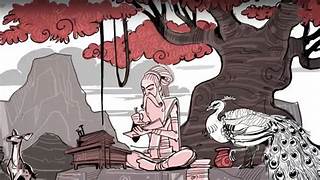
I recently underwent 2 online meditation courses conducted by Sri Sri Ravi Shankar’s Art of Living Foundation. While the meditation courses per se were OK, one of the Teachers talked about 3 “Meditation Sutras” which made a strong impact on me.
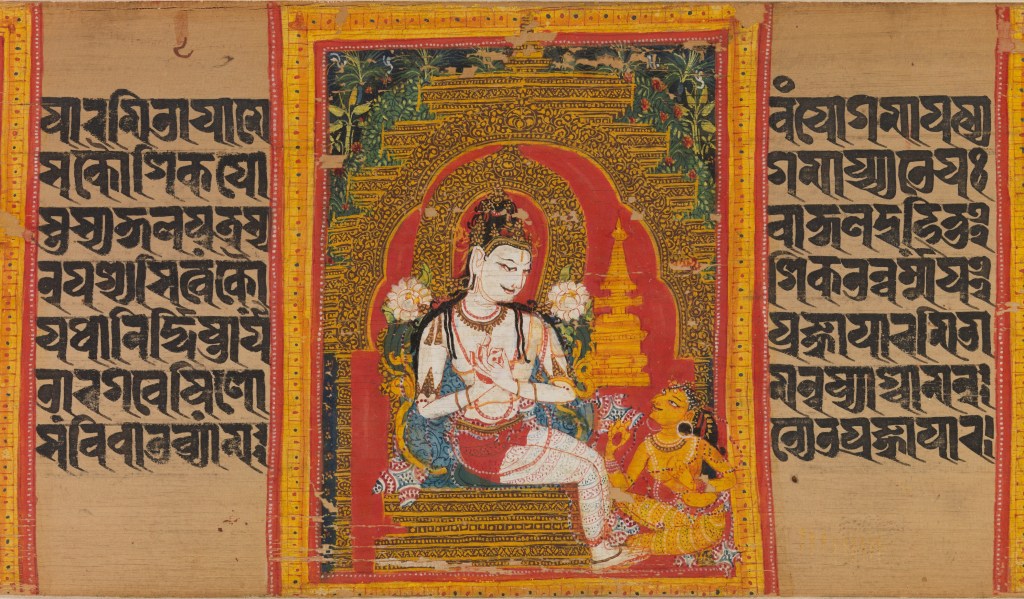
I thought that these Sutras were actually Life Sutras, & can totally change one’s life if one understood & practiced them. So I thought of sharing them with my readers & convey why I am so excited to learn these. To me, the revelation was akin to a hidden treasure chest. Something which can lead & direct your life for all times to come. And to the egalitarian in me, what appealed most is their sheer universality. The Sutras apply to everyone regardless of race, religion, color or creed. They indeed bind all of us into a solid brotherhood, held together by our common human condition.
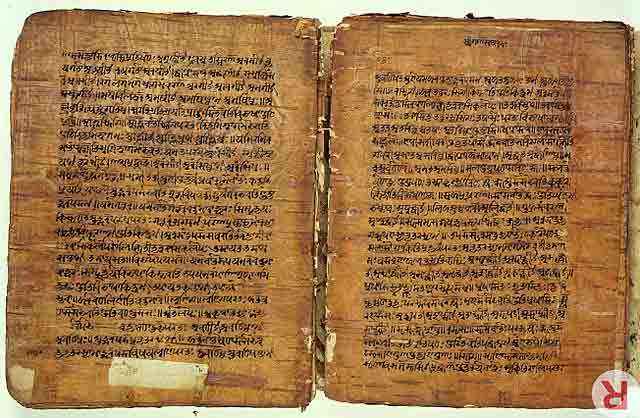
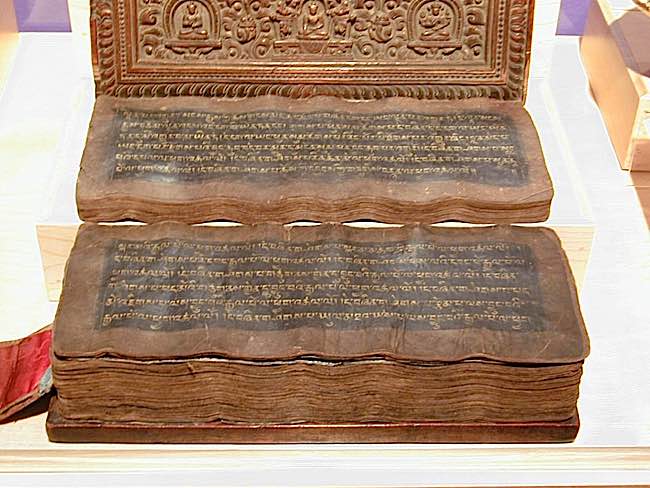
But before we talk of the 3 Sutras, Let us spend some time in understanding what is a Sutra. A Sutra (Sanskrit: सूत्र, romanized: sūtra, literally ‘string, thread’) in Indian literary traditions refers to an aphorism or a collection of aphorisms in the form of a manual or a condensed manual or text. Sutras are a genre of ancient & medieval Indian texts found in Hinduism, Buddhism and Jainism; underlining their universal application & appeal. Sutras are called Sutras because, like a thread (or twine or string), they bind in written form, a previously oral tradition. The term was certainly also initially descriptive since the works were written on leaves or pressed bamboo slats, which were then bound together with thread. (Ref. http://www.worldhistory.org/Sutra/ )
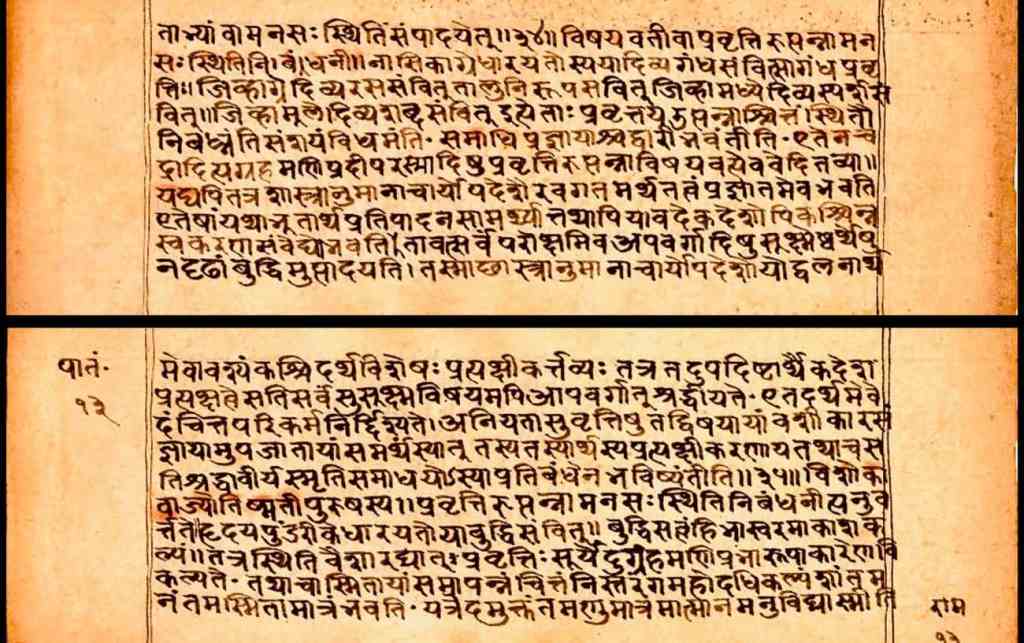
We have all heard of the Panini’ Sutras. Patanjali’s Yoga Sutras. Which one of my readers can claim they have not heard of Kama Sutra of Vatsayana? That apart, mostly Sutras were used for propagation of religious teaching. For example, in Buddhism, Dharma tradition goes back to the teachings heard directly from Buddha. These were memorized by the immediate followers of Buddha & handed down directly from master to pupil orally. . The 1st attempt to agree the form of the Buddhist textual tradition, what was remembered as the authoritative ‘word of the Buddha’, took place some months after the Buddha’s death at Rājagṛha in northern India when 500 arhats (one who has achieved Nirvana and liberation from rebirth) took part in a ‘communal recitation’ (saṃgīti). Thus were born The Thervada ( way of the elders) and Mahayana Sutras. Though in written form these were accepted as the buddhavacana ( Buddha’ word)
Enough said. Let us move to the 3 Sutras that blew me over. They are:
I want Nothing
I do Nothing
I am Nothing
Let us understand each of these in some depth.
- I want Nothing. Buddha based his entire teaching on how to avoid pain & suffering on this one principle. Desires & Wants, Needs & Expectations are the root of all suffering & pain. If you want Nothing, you are beyond the realm of attachment. And it is attachment that brings pain in its wake. This is easy to understand in isolation. But when you go to practice wanting nothing, you realize that it is more difficult than you imagined. Especially today when instant gratification is the norm. Desires come up, or are thrust on us through the social media & advertising, so much so that we are always running behind the newer phone, the better car, the larger house, more cool friends William Wordsworth understood this well when he warned us,”
The world is too much with us; late and soon,
Getting and spending, we lay waste our powers;—
Little we see in Nature that is ours;
We have given our hearts away, a sordid boon!
By living the I want Nothing sutra, by slowing down, by accepting ourselves as we are, by refusing to be in a “catch-up” mode, we stay rooted in our hearts, happy with what we have, content & relaxed in our present state. This makes us powerful. Remember the popular blurb, “ even if you win the rat race, you are still a rat!!”
2. The next Sutra says : I do nothing. When I retired about 10 years ago, after an active career for over 35 years, the very idea of doing nothing was terrifying & intolerable. A situation to be avoided at all cost!! How will I keep myself busy? My very self-image was at stake, since as a professional careerist, I had been striving all of my life. But that was the past. Now can I live life differently? Can I let go? I soon came to realize Letting go of everything & doing nothing, even briefly, has mental and physical health benefits.
Initially, embracing the practice of doing nothing may create some discomfort because it’s absolutely opposite to our usual ways. But 10 years post-retirement, I find myself extolling the virtues of doing absolutely nothing, or close to it.
How does it happen? De facto, you are dropping all efforts. And the ego of being THE Karta, making all things around me happen. You stop being the General Manager of the World. And resign yourself to the twists and turns of serendipity. You are not the pilot, the ATC, the flight is moving sans your effort. Only thing for you to do is float. Be in the Present. Enjoy outcomes of every Moment. Without a fret or a fume. You repose your trust into a Greater Artist, who knows every move. And you resign yourself to let things unfold into the Larger Design, no longer limited by your smaller and narrow vision. Trust the Process. Let Go. Enjoy the outcomes. And have Faith that it will all be alright in the long run. This was exactly the mood in which Mukesh sang way back in 1967 in Boond jo ban Gayi Moti.
दिशाएं देखो रंग भरी चमक रहीं उमंग भरी
ये किसने फूल फूल से किया श्रृंगार है
ये कौन चित्रकार है ये कौन चित्रकार ( who is the master painter who has filled colors in all directions & flowers…transliteration)
3. And the last Sutra : I am Nothing. Recollect the Biblical Canon : Remember Dust you are & to Dust you shall return (Ecclesiastes 3: 20). And yet, how often we get caught up in our roles, our trappings of power & feel we are important. We believe it is our effort & diligence that is making the world go round. Further we fall into the trap of thinking How will this go on when I am not here or if I don’t do all that I am doing.
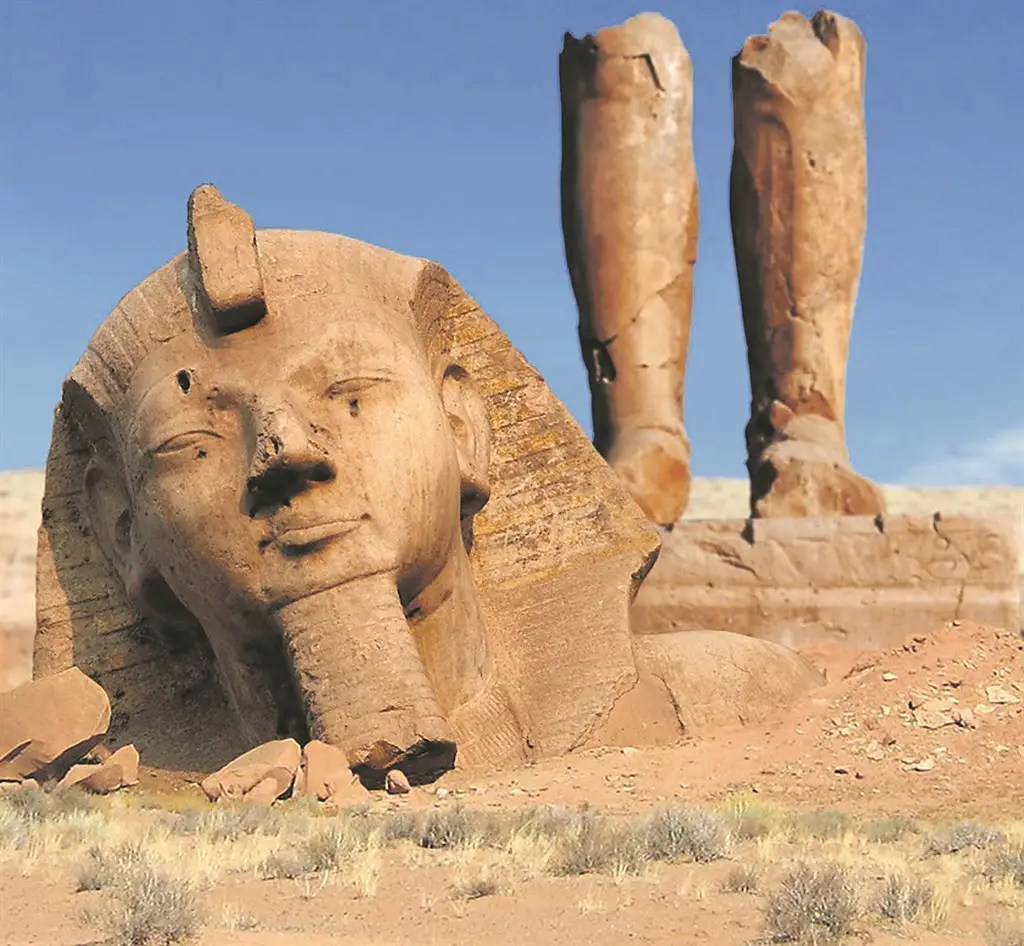
PB Shelly captured this arrogance well in his poem Ozymandius. Despite Ozymandius’s proclamation,” Look on my works, ye Mighty, and despair” The very next line tells us ” Nothing besides remains. Round the decay/… boundless and bare/The lone & level sands stretch far away”
Mark Twain in his characteristic style put is so well “ If you have Nothing to say, Say Nothing”. Still, the universe is full of noise, mostly beginning with I . The Reign of I is unbridled & even the most well meaning folks fall into its trap. Jiddu Krishnamoorthy had stopped using this pronoun I altogether. That is a rudimentary level. The real challenge is to conquer the I. All teachers are teaching us to annihilate the I And yet it grows, even amongst experienced folks. Arguably the 3rd Sutra is the most difficult to practice But it will take us to the most esoteric levels.
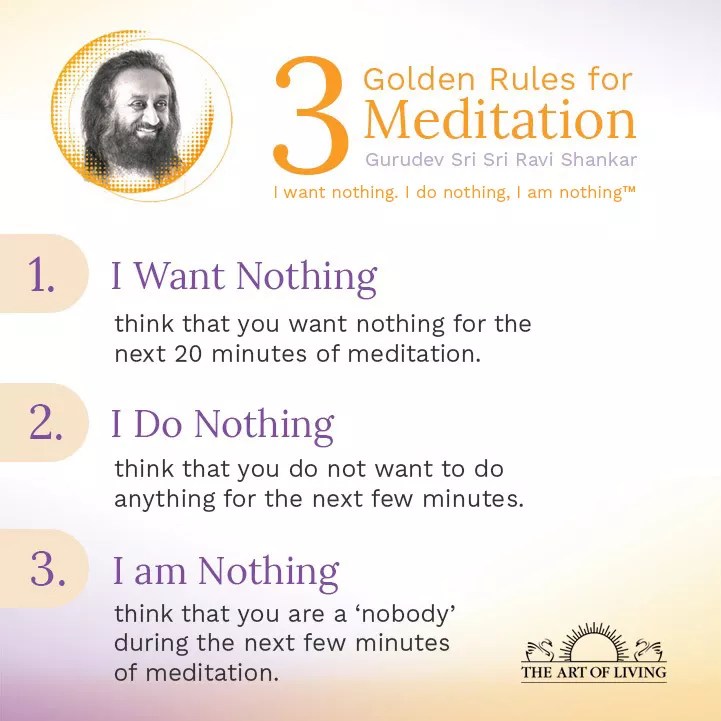
So remember : I want Nothing, I do Nothing. I am Nothing
Join me in the challenge of living the Sutras vikas
 Vikasblog
Hi vikas
Sorry for delayed response.
As usual you have selected a difficult subject but justified it well with your thoughts and expressions.
it is not easy at all to practice these .
i want nothing is only possible when one can detach himself from every thing .This is like becoming a monk and as Jagdish bhai ha written living in elevated consciousness.
great work.
keep writing
Harish
LikeLike
HG
thanks for your comments and encouraging words
Indeed Life does not come with an operating manual
it is difficult and keeps challenging us at all stages
as the Beatles sang long ago
Its a Hard Day’s Life
LikeLike
WordPress.com / Gravatar.com credentials can be used.
LikeLike
JLS
pl forgive me for a very very late response
Yes indeed
The Sutras are very very difficult to understand and Practice
There is one Nisagadatta Maharaj whose book I am That (So Aham) captures the of what you are calling elevated consciousness
You were lucky you got the Path illuminated by your association with PPBK and your practice
Am sure Dadi must have left deep impressions on your growth on this path
Must confess my blasphemy though: Sometimes I feel these esoteric concepts and practices are of what we call Bharlya Potachi Dukhni These ideas appeal only after the basic needs are fulfilled But then maybe that is my negativity raising its head
The fact is I want Nothing, I am Nothing, I do Nothing are Sutras which will take a while to take root, if at all. Am sure eevry seeker has had ups and downs on this path. Nevertheless the direction must be clear and all your life is a struggle to travel further on this path. Buddha, BK, or whatever you choose Finally There are multiple ways to reach the Allah….
Thanks for taking interest in my writing and encouraging me
LikeLike
Sir, I was trying to share an image having these five daily reflections as taught by the Buddha in the Upajjhatthana Sutta
LikeLike
Hrushikesh
this is superb.
really makes you think
I love it
it can really be a torch for lighting our path ahead
many many thanks for sharing
LikeLike
good concept and a real sutra to follow in life. Brother the way you express is superb
LikeLike
Chinchu thanks for your words of appreciation They mean a lot to me.The base of my good expression was set in Stewart alongwith you all
thanks
LikeLike
thanks a lot for sharing this very thoughtful Sutras.. I had heard people using the Sutra for Formula.. Please keep sharing.
LikeLike
Dr Nitin many thanks for your comment
I feel the beauty of Indian thought is it is capable of multiple interpretations based on your need and experience
So a formula also works for Sutra
LikeLike
Sir, let me allow to join this endeavour to live the three sutras which is essentially how to live a happy life. To my mind there is still a deeper question as to what is life ? There may be 7.5 billion answers to this question. One answer is in the form of this poem by Aarsi Prasad which I am sending you separately.But the blog is very nice and thought provoking.
LikeLike
Thanks HCP
indeed 7.5Bn answers and maybe equal ways to live
look FW to receiving the poem of Aarasi Prasad
much appreciate your kind words of support
LikeLike
This is the Abundance mindset as per modern philosophy. “I want for nothing, I have everything and I am grateful for everything.”
Your journey post retirement is something I have experienced a decade earlier in my life, this year. It totally resonated with me – Surrender, Divine timing, Serendipity 🙂
This ego-death process is painful indeed but the light at the end of the tunnel is so illuminating !!
Thanks for sharing and inspiring,
Nilu
LikeLike
Nilu
Yes if you look deeply we are all doubly blessed and should remain in the Abundance mindset
But being human we indulge in comparisons
and there in lies the rub, as the Bard said
every development in our lives teaches us
we must be willing to learn
many thanks for your comment
LikeLike
Very well written and explained. Most of our scriptures say similar in different way, Krishna’s Karmayog in Gita. Someone has said boastfully, learn to to float in the river, you are doing nothing, just flowing without any efforts wherever river takes you.
LikeLike
KK true learning to float
trusting the river
Going where ever it takes you
is bliss indeed
Unfortunately our desire to choose & control comes in the way
and draws us off the course
Karma Yog is a great learning
Thanks for pointing out that parallel
LikeLike
Loved this one. Thanks for sharing
LikeLike
Many thanks Preeti for ,your words of encouragement
LikeLike
Sir,
That was a very meaningful piece, which one can appreciate only with experience
As the scope of my reading expanded, I am settling down to the belief that what the Buddha taught was the most rational and most practical stuff, to help us manage our existence well
Just sharing a piece which I thought would help in following the three sutras you shared
Regards Hrushikesh
LikeLiked by 1 person
Hrushikesh
Thanks for your comment
Having done Vipassana multiple times I too believe Buddha was a path breaking teacher
The piece you referred is not attached, nor is any link
pl help
would love to read that
LikeLike
Excellent Read sir thanks
LikeLike
Zeh Naseeb Saiba
Thanks to mere ore se banta hai
LikeLike
excellent read sir thanks
LikeLike
Thanks for your kind indulgence
LikeLike