

Delegation is not about getting rid of tasks; it’s about empowering others to help you achieve your goals.” -Laura Stack To delegate OR not to delegate: That is the Question?
Today’s organizations are all about team working & interdependence. And yet, some managers end up working alone when it’s time to collaborate with their teams? I believe the primary reason is insufficient delegation skills. Poor delegation shows itself as micromanagement, inconsistent deliverables, poor communication, & other unfavorable outcomes. Understandably, improving delegation skills is crucial for managers to enhance organizational effectiveness.

A study by HBS examined the role of delegation. They found that delegation enables subordinates to exercise self-direction & control, providing employees with meaning, perceptions of self-efficacy & self-determination, & the feeling that they make an impact. All these are key ingredients of empowerment. (https://online.hbs.edu/blog/post/how-to-delegate-effectively)
Why Delegation ?
Delegation is a critical skill for managers to master. This allows managers to utilize their team’s strengths & increase productivity. It allows them to get more done through their people & leads to higher output from the team & success for the organization.
When a manager can delegate work effectively, organizational stakeholders praise the manager for getting the best out of the team. Higher-level managers take note of this manager’s ability to run a productive unit & consider them for higher levels of management responsibility. Conversely, when a manager cannot delegate work effectively, organizational stakeholders criticize them for the inability to use their human resources effectively . Doing tasks that others should be doing or leading a team who are under-utilizing people resources is frustrating. I am sure all practicing managers have personal experience of this.
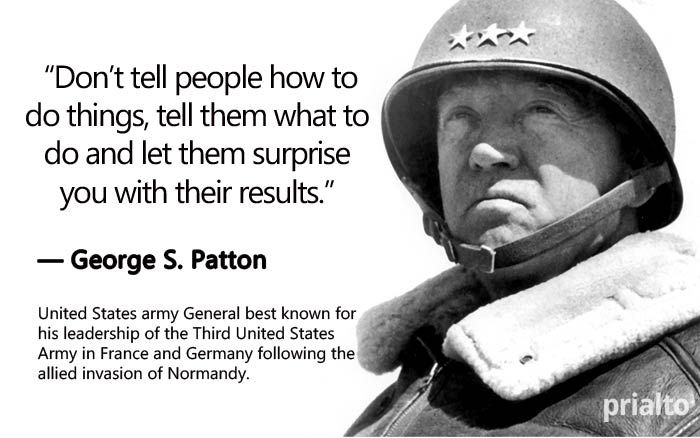
What Makes Delegation Difficult?
Delegation makes us feel that we are giving away control of our projects. Our emotions, passion for the project, limiting beliefs & our judgment of the other person comes into play. In delegation, remember we can delegate the task or execution, but never the responsibility for the task completion. Best example is of working parents who delegate child care to a nurse or relatives, but the responsibility for the child’s upbringing remains with them.
Why do Managers fail at Delegation? Getting over barriers to delegation, requires some emotional intelligence & personal development. It requires taking a good look at ourselves & evaluating how we are dealing with the -1. Fear of Failure When handled correctly, mistakes can serve as valuable learning experiences to enhance performance, foster innovation, & refine operations. Through sufficient development & trust-building, team members are more likely to rise to the occasion rather than falter. Remember the Pygmalion Effect!!
2. Envy of Your Staff Member’s Ability If you feel a tinge of envy towards a particularly talented staff member whose skills surpass your own in certain areas, it’s important to address these feelings internally. Once you’ve intelligently managed your negative emotions, empower your skilled staff member to shine in their strengths. Their success ultimately reflects on you as a leader who harnesses talents of their team.
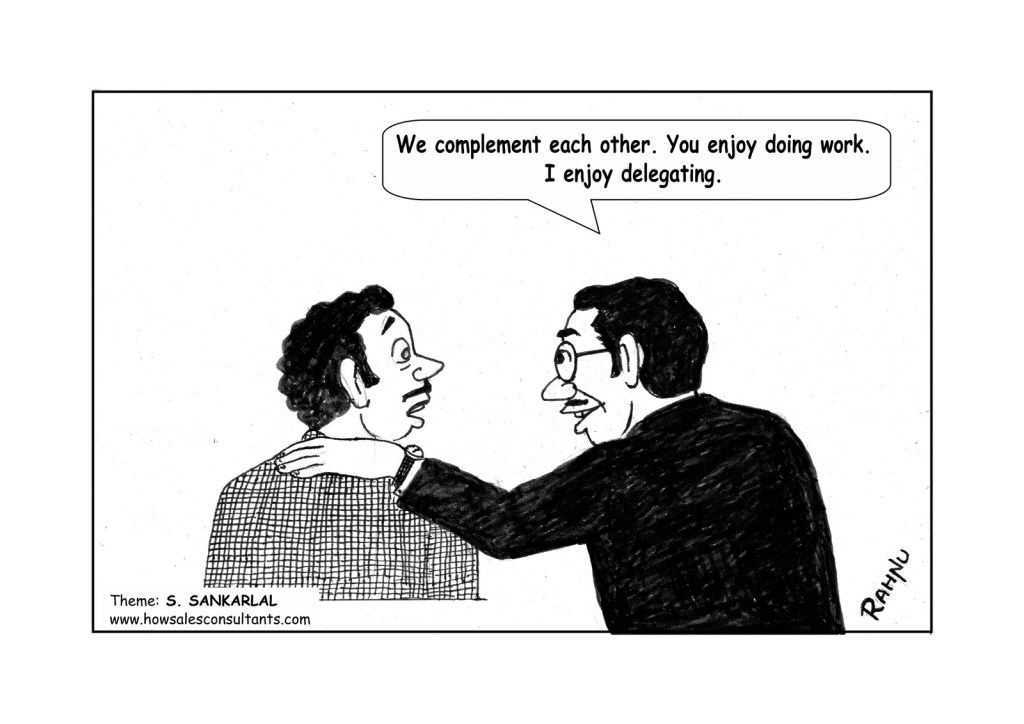
I once had a boss, who used to continuously deride & pull me down. I realized it was envy. So one day I sat down with him & openly told him, ” Sir I am not in competition with you. You are my boss & will remain so. My success will be counted as your team’s success” To his credit, our work relationship changed.
3. Can Do It Better Myself! Of course you can! Your technical proficiency has played a pivotal role in your success. Reframe the question: “Is it more beneficial for me to handle this task myself or delegate it to someone else?” “Delegation is not a sign of weakness, but of strength.” – Steve Jobs. Tasks don’t have to be executed exactly as you would. Prioritize empowering your team rather than being overly involved in every task. I have always propagated that only a confident man, can delegate. The insecure will keep cards close to their chests & never delegate.

4. Like To Do This Myself! Principles of delegation emphasize that managers should delegate tasks that others can effectively handle. Whatever our job description, we all spend max time in areas which we enjoy working on. Learn quickly that your focus must be on managerial tasks that only you can handle. My public pronouncement in my team always was, “I have no quarrel with people who want to do my job. Pl come forward & take over. I will find something else to do!!! Both of us will be happy”
5. Better Not Give Him Too Much Authority or I Will Lose Control Effective delegation requires you to identify who possesses the right attitude & skill level Then grant them the authority to carry out the task. By delegating you are not losing control but you are adding a new skill to your skillset. It will allow you to create the space for deeper, strategic work. Moreover you are creating your replacement so that you can move elsewhere. I take great pride in the fact that I can count nearly 20 people who worked with me & are now heads of HR in different organizations. Some have risen well above my highest level. Even now, years after our official relationship ended, they insist on calling me Boss. When I challenge them, their answer is, ” we are only doing what you taught us to do: so you will always be my Boss”
Effective delegation strategies for managers:

- Play to your employees’ strengths & goals: Assign tasks that align with your team members’ strengths and career goals, increasing their engagement and motivation.
- Define the desired outcome: Communicate the expected outcome of the delegated task to ensure everyone is on the same page.
- Provide the right resources & support: Ensure team members have the necessary resources, training, & guidance to complete the delegated tasks successfully. That is your PRIME responsibility.
- Overcome common barriers: Address obstacles such as fear of failure, envy of employees’ abilities, and believing you can do it better yourself.
- Express appreciation and provide feedback: Show gratitude for your team members’ efforts and provide constructive feedback to help them grow and improve.
- Monitor progress and results: Regularly check on the progress of delegated tasks & provide support as needed. Evaluate the results & outcomes to identify areas for improvement. Remember, What gets measured, Gets done!.
- Delegate in stages: If you’re concerned about losing control or authority, start by delegating smaller tasks & gradually increase the responsibility as team members gain confidence & experience. And you learn the game!!
- Train employees adequately: Ensure your team members are well-prepared for delegated responsibilities by providing adequate training & support.

Let me end with a personal example of a Guru & Master I met on my journey. I was a training & development person with some skill in Recruitment first 2.5 years of my career. I was transferred to Corporate Industrial Relations to assist Arun Bhende. Within 2 months of working with him, when he taught me the ropes of Labor Laws and Drafting, we had a strike situation in one of the plants, Bhende told me to go & handle it alone. I was aghast!! Here was a rookie in IR, never worked in a plant or with blue collar employees, being asked to handle a strike. Scared to the core, I expressed my reservations. Supremely confident Bhende’s one line brief was, “Vikas, go to Nashik and do what you think is right. Industrial Relations is practical wisdom. You cannot go wrong. And if you do goof up, tell people you had consulted Bhende & he told you to do that. Don’t worry, I will back you up whatever it is”. I learnt Delegation from that one incident And all my life I have been indebted to that Maharao for the baptism by fire.
Remember Delegation helps you grow & helps your team grow too ; fusion of स्वार्थ & परमार्थ ; try it: vikas



🙏🙏It was nice read, Vikasji. I couldn’t read it earlier, felt sorry for it.
I M sure, U would approve my making this post viral.
Sh. Bhende’s style is much appreciable. The confidence he expressed must have rendered U strength to deal with odds.
I hardly worked in Corporates, so have no exposure the way U have. However tried to employ some good practices in my organisation.
Now I M not active in commercial organisations, however try to remain updated & U R helping me to do so.
Do keep on posting.
Take Care. GOD Bless U 🚩🚩
LikeLike
What a great piece of wisdom and guidance Sir. Loved it. While reading it remembered the days when Bhende Sir would talk to me at times (I was on a HR orientation programme in Kalwe) in those early days of my career and was fortunate to interact with such personalities who instilled confidence & courage with every such interaction. Also made me recall your inputs in IR and some memorable moments at your place having lunch sitting on the floor with others amongst whom a few used to be from union/workmen councils sometimes. The post I immediately shared with my son who has just taken over a people management role where he leads a team consisting of members belonging to nationalities from across globe. Your inputs are universal and I am sure he would be much benefitted. This part of my comment is more emotional and at personal level.
Now the technical side of the post being so exhaustive I may only add to say that the practice of effective delegation in an organization could only come with leadership showing the direction and living by example. Organizations would have organized and conducted n-number of training for their managers in this regard but unless the same is visible and practiced it loses its impact and never turns into being the culture of the organization. The futility of finding a successor at various levels of leadership in many organizations that we see many a times , in a way I take it as the ultimate failure of delegation to work as intended in such organizations. Thanks again for enriching us all the time.
LikeLike
Kabir
Bhende was a Giant among men. As was Khandekar & even Shrinivas Pandit in his own way. We were fortunate to have such stalwarts guiding and mentoring us. And they demonstrated and lived the HR values so transparently, that I often feel a lion’s share of the credit of what we achieved was due to them, and no credit to us actors. We were just following the RIGHT ROYAL ROAD they set in front of us.
Indeed the learnings are universal and I am sure any people manager will benefit from thinking about these subjects.
Training cannot make a person a delegator. Just as being in HR does not make some people oriented and a person who shares easily. That has to come from within Your mindset contributes a lot. I always remember Ramesh Kasbekar who was our Training & Development person. I have not seen a more closed person in my life. He would zealously guard his slides/OHPs at that time and never shared any resource. Travesty of justice was he was in T&D and in HR. My learning in working with him was every PPT I made the last slide was “This is is my mail id. If you want this ppt write to me. Knowledge is for sharing and then only it grows” Again it is mindset
Delegation is totally mindset. If you think you will do things best, you do not require others, you will not delegate. As against that people like Bhende taught us, if you give you get more in return. First move has to be yours
LikeLiked by 1 person
Another lovely post, Vikas dada!
You have captured the essence of this all-important life-skill well. In order to have capable employees to whom you can delegate, first one needs to invest sufficient time and trust in them. One cannot expect that just because one hired someone with specific qualifications and recommendations, he/she will be up to the mark.
This applies to our equation with family members (esp. children) as well as domestic help also. The more we entrust them with bigger responsibility, with the willingness to take accountability for it, the more confidence they will gain to perform the same.
Most folks are not able to delegate effectively because-
I believe that our relationship with ourself plays a big role here – if we truly value ourself viz. our health, sanity and time, then we will make the necessary adjustment for the same.
Nilu
LikeLike
Also, it comes easily if someone has shown the same trust in you – like Mr. Bhende in your case.
LikeLike
Bhende
That was a Man….a la Shakespeare’s comment in Julius Ceaser
I was fortunate to sit at his feet and learn HR
and even today I give 75% of the credit of what I became and what I achieved to the 3/4 years that I served as his assistant
he indeed was a person for whom Shakespeare’s words ring true
“His life was gentle; and the elements
So mixed in him, that Nature might stand up
And say to all the world, THIS WAS A MAN!”
LikeLike
Nilu very well said
and many thanks for your kind words and detailed comments
I agree it always begins with “relationship with self” as you put it Someone who is uncomfortable with self and lacks… confidence in self & trust in other….can never delegate.
A close friend build on the concept of DE(legate) and pointed out that DE(legate) includes DE(tail), DE(velop), DE(liver), DE(centralize) & DE(mocratize). I find that a great value add as while delegating you must detail & clarify the deliverables, develop your team to be aligned to goals, decentralize the power & authority and consequently democratize the work place Delegation is finally about power sharing and can never happen at the hands of an insecure and competitive boss who wants to second guess his own team always
The Steven Covey insight in the Speed of Trust does come in here to understand the dynamics. With increasing Trust, speed of work increases and cost of the work decreases which Covey calls the Trust Dividend. This he contrasts with Trust Tax when trust is low leading to low speed of execution and increased costs.
Good managers soon learn the joy of letting go…lesser pressures for them and the adv of developing your team and creating your successors.
Thanks for enabling me to publish here the DE(…) of my dear friend who put it to me on a WA message
LikeLike
Right. By investment of “time” – I meant all this only DE(tail), DE(velop), DE(liver), DE(centralize) & DE(mocratize). One has to spend that time with the delegate for an indefinitely, until the delegate is ready.
LikeLike
Yes indeed Nilu it is time consuming initially But will actually save you a lot of time in the long run
I especially love the DE(mocratise) in the definition
finally all efficient & proactive management is about sharing power, democratizing the processes and developing your people to be independent to deliver
LikeLike
Hi VS:
it is evident that on this subject you are playing on your “home pitch”! All the illustrations make very insightful understanding of the purpose, process and the outcome of delegation.
My take on the subject:
Often you see hypocrisy in the matter of delegation. Many bosses speak very high of the need for delegation , make great ‘motherhood’ statements and also claim that they delegate in a big way ..but if you go deeper, it appears to be just a lip service!
I personally ,however, have been greatly benefited by delegation by my seniors. During my very initial years, Mr B P Mistry (fondly known as Mistry saheb) was my boss. He genuinely encouraged delegation. His one mantra, which has stayed with me since, is “ You can delegate a task..but you can’t delegate responsibility”. This is what your blog also mentions.
The others higher up in the chain , like shri T P Desai and Dr A R Naik showed similar encouragement to lift up the middle level executives in the company. When the performance was good, I recall Dr Naik taking me and Mr A N Desai (Finance) to Siddharthbhai (the then Chairman) to give credit to us and to enhance our visibility.
The way Sunilbhai left almost all decisions to me once the Ciba was separated from us ,was a big morale booster for me and can never be forgotten.
These are , according to me, rare examples. Most of the time , ‘letting go’ is a huge challenge!
The key aspects in delegation are the level of Self confidence of the Boss and the ability to win his trust by his junior.
Any senior who wants to delegate effectively would be well advised to go through that popular short book “One Minute Manager” ( by Ken Blanchard & Spencer Johnson) and imbibe those simple principles .
LikeLike
Thanks JL for your comments
and the real life personal examples you have shared
and the recco on the One Minute Manager
all very useful
Indeed letting go is difficult but unless you do so you cannot really catch something new and like the proverbial monkey, get trapped with what you continue to hold close
I used to use one blurb i read somewhere: Drop your past baggage for an easier future journey
managers who quickly understand that they have to let go and move ahead are the ones which create great learning journeys for their subordinates
Here lip sympathy will be easily seen through and people have to feel genuine empowerment and delegation to learn new tings and thus grow as a professional
Like you i too was fortunate to get some great bosses who loved to delegate and I owe my growth to them
when there were some who refused to delegate, I quickly shifted to another rule
it is better to apologize later rather than wait for permission
If the decision you took resulted in good outcomes typically boss will forget his initial apprehensions and join the celbratory band wagon
interesting indeed is this path
Once again thanks for your comments
was missing your presence on the site
Now I can die in peace, he he
LikeLike
usually the person knows the benefit of delegating ..the reluctance to do so has a root in the uncertainty involved…like in case of the trapezoid artist in a circus…he has to leave the grip of one ‘Zula’ to catch the next coming his way. If he is not sure of catching the next one, the period between leaving one and catching the next can unnerve. This makes him reluctant to leave it in the first place !
and VS: no thought of the END! we need many many more blogs from you to squeeze out all the wisdom you have acquired !!!
LikeLiked by 1 person
JL thanks for your follow up comment at 5 30 pm
Because of the stupid nesting concept of Goggle I nearly missed it
Yes the moment when the trapeze artist lets go is a moment of great risk
a moment of uncertainty
But great results come from great risks
and one who has the most risk appetite usually over-takes the conservative player
I have a lovely one liner for that
all MAGIC happens out of the comfort zone
when you step out and go through fear, you emerge in growth
That is the journey we all must embark on
There was Bhende in my life & SSL and TPD and others in yours who trusted and enabled you to move ahead out of your comfort zone No we wowe it to our teams to create the same confidence in them to step out
Literally like the unsaid promise of the catcher on the trapeze, :” Let GO” I will catch you
LikeLike
This is such an important topic, which unfortunately doesn’t get the attention it deserves. Especially in today’s high speed corporate environment, delegation is a key tool that can help leaders grow and create other leaders. I always tell my team members that they should attempt to make me redundant. Only then can I take up something bigger and they get to take up some of what I do. The article sums up the wisdom of decades of leadership experience so well!
LikeLiked by 1 person
AR beautifully said
as soon as your team makes you redundant, you are ready to step up and do something different, new and larger
I never understood managers who held everything close to their chests and refused to share
that is the example I have put in the blog, where I had to tell one boss, I am not in competition with him, we are on the same side and with common deliverables
I believe that is where EI and maturity of the seniors comes in
thanks for your perspective
LikeLike
Well articulated and illustrated.. loved the personal experience… I am a bad delegator whether at office or at home and then naturally am overworked and overwhelmed most of the time! this article is really helpful!
LikeLike
Praju Once you start there will be initial trepidation
live with it
Understand that you can always do it better than someone else
But the moot question is
do you want to continue doing the same thing always
As a leader you must create space on your calendar to look at new things
LikeLiked by 1 person
You have correctly identified the insecurities of the delegator as a prime reason for his inability to delegate….
There’s another reason – extreme fastidiousness about the quality of work you’re delegating.
It’s about not finding the quality of the delegatee as good as your own.
The quality of your own work might have been outstanding. The quality of work by your delegatee is not as good as your own.
The question to ask is – is that high quality required? If yes, Then you need to spend time to bring up his quality of work. If that high quality is not required, perhaps you can cringe but let go.
This may sound like I’m supporting “Chalta Hai” quality, but it’s not that.
Think about the last birthday gift you wrapped. You spent hours getting it done to your satisfaction. You were proud about how well you had done it.
You hand over the gift. 5 seconds later, the gift has been opened without anybody paying any attention to the quality wrapping you were so proud of…
Perhaps you should have delegated the wrapping to your lesser self…..
LikeLike
Ravi
beautiful example of the gift wrapping
often we get stuck in a concept of “excellence” wo questioning whether the task requires it? is the addl time spent justified? is it reqd? is it really the “customer” expectation
Being in an FMCG environment for long I quickly learnt the principle of ” Dont do things which the customer is not paying you for”
many non Value add activities then fall on the saide
it was never expected not reqd in the first place
learn these non VA items and quickly distance your self from them
that is the path to your and your teams’ happiness
Your first point is also brilliant
you can always do it better than the delegatee
But is that “better” essential?
is the “customer” paying for it?
In a related aside, It is said give any urgent work to the most lazy person
he will always find a faster way to complete it
Cheers
LikeLike
Very well articulated. I think that is your USP.
LikeLike
Milind Bhau aapke ke muh me ghee Shakkar
I try to write from personal experience
possibly that is why the flow is good
LikeLike
excellent case study and article Vikas ji
LikeLike
Shama ji thanks for your kind words
mean a lot to me
LikeLike
Hearty Congratulations to you for your very detailed work on this very important topic. It provides very good clarity on all the aspects very well. It will make leaders to revisit thoughts and rework on the subject.
Many best wishes Sir.
LikeLike
HB thanks for your words of encouragement
Yes I do hope more leaders realise the importance of this skill for multiplying their teams’ outcomes
Have tried to remain practical and not talk theory
let us hope it eases the tak list of managers and frees them for moving up the value chain: really doing what ONLY they are capable of
LikeLike
Well balanced article!
It’s a tricky question on balancing delegation and doing things yourself. But finally, you have to do it simply because you won’t be able to scale otherwise. The team grows, and next generation of leaders are groomed.
If you don’t delegate, you and your team are going to be stuck where you were.
LikeLike
Amit
very very true
Time is limited
if you keep doing something which could have been delegated, you are occupying your time with lower VA activity
You must focus on something which only YOU can do
You owe that to yourself and the team
a friend put it beautifully
with Delegation the Team Grows and GLOWS
LikeLike