
घर थकलेले सन्यासी
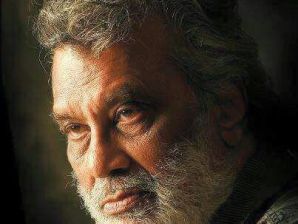
Marathi poet and writer Manik Godghate, popularly known as Kavi Grace, died in 2012 after a prolonged battle with throat cancer. Known for his writings that portrayed sorrows in human life with a mystical element & an out-of-the-world imagery, Grace was conferred the Sahitya Akademi Award. Some poets go from light to darkness; some others from darkness to light. But Grace befriended darkness, shaking hands with melancholy, reveling in anguish & chose to remain on the dark side of the moon & created experiences through his poems.
“I am free” said Kavi Grace, “but I am not available”. Sorrow, Darkness, Eventide & Negativity were his constant imagery. Calling himself दुखाचा महाकवि…The Epic Poet of Sorrow, Grace left an indelible mark on Marathi literature. Earlier I have talked of his poem ती गेली तेव्हा (When She Left) in which he has talked of the pain of losing his mother quite early. Today I will tell you about घर थकलेले सन्यासी. As you go through the poem, you will realize it talks about each one of us, who are world weary, and still travelling!!

घर थकलेले सन्यासी, हळू हळू भिंतही खचते
आईच्या डोळयामधले नक्षत्र मला आठवते
“Exhausted travelers, locked at home/ Slowly the walls also close in/ I remember the bright constellation, in my mother’s eyes”. Grace had a lonely childhood, having lost his mother very early. With his father constantly travelling, the solitude sparked poetry within Grace. But loneliness & pain never left him. In my own case, I had the fortune of having both my parents living till I was 57 years of age. But the loss is still painful. The feeling of being boxed in, of the walls around me closing in threateningly, was the same. The memory of the bright spark in my mother’s eyes.. pure glint, the soul sparkle, kept me going.
ती नव्हती संध्या मधुरा, रखरखते ऊनच होते
ढग ओढून संध्येवाणी, आभाळ घसरले होते
“It was not a soft, sweet evening, it was a harsh, dry sun
Per chance with the clouds’ cover, it felt like the sky had fallen” Sorrow and pain do not necessarily make their move onto you in the dark. They are bold enough to attack in broad daylight, under the fierce sun.
Remember the lovely way WH Auden in “Musée des Beaux Arts” taught us,

“About suffering they were never wrong,
The Old Masters: how well they understood
Its human position; how it takes place…
How, when the aged are reverently, passionately waiting
For the miraculous birth, there always must be
Children who did not specially want it to happen, … how everything turns away
Quite leisurely from the disaster…” To Grace his pain is momentous. To me, my loss & my failures are large, impactful. But does it make a difference? Does the world care? With every pain & loss do I become stronger? more hard-headed & hard-hearted? capable of bearing more as life goes on? Or do I collapse under the sky, which has fallen on me?
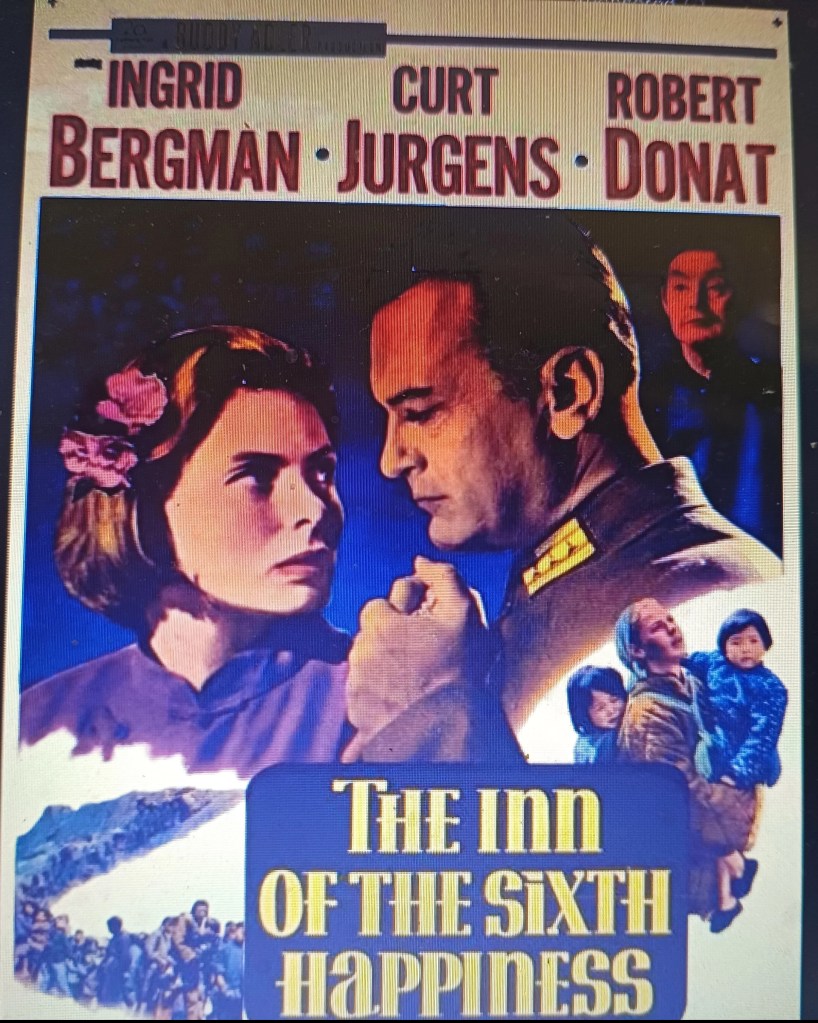
The way Godghate chose the nom-de-plume of “Kavi Grace” is most interesting. he was impressed with the acting prowess of Ingrid Bergman in the movie The Inn of the Sixth Happiness. Ingrid played a tenacious British woman who becomes a missionary & runs an inn for travelling merchants.. To describe Ingrid, a line from the movie: “She is in grace” inspired him. He took his name Kavi Grace from there & dedicated his first book of poems Sandhyaakalchya Kavita to Ingrid Bergman.
पक्षांची घरटी होती, ते झाड तोडले कोणी
एकेक ओंजळी मागे, असतेच झर्याचे पाणी
“There were birds’ nests, yet someone cut down that tree
Behind each handful of water, the spring peeks” I have seen & experienced the sheer unfairness of life. What should remain untouched & protected is often the first one to fall under the axe. A confidante of many years suddenly decides to move on & cuts you off from his life. Having worked most diligently on a project one sees results go awry & crumble before your eyes. Life is quite unpredictable & the race is often not to the swiftest. We all know many people more diligent & sincere than us, but have not got their due. Partiality and Inequity goes on.

And yet there is that fundamental faith. The continuity of the river. Pure is always pure. In each one of us & in our actions, there is the microcosm of the Universe. While the philosophical position, that the flowing river is never the same all the time is true, it is equally true that there are certain commonalities, behaviors, thoughts that bind it all together. That is how the spring peeks behind each handful of water. It is changed & yet it is the same. It is different & yet it endures. The eternal hope that the birds will move to another tree & set up their nest there, is always heartening!!. One broken tree is not the end of the forest, if you look at it positively.
मी भिऊन अंधाराला, अडगळीत लपुनी जाई
ये हलके हलके मागे, त्या दरीतली वनराई
“Scared of the dark I hide in the surrounding mess
Yet the greenery of the valley, followed me slowly”
Whenever we are faced with problems, to withdraw & hide is our natural instinct. Throughout my life, I learnt to make this into a fine art. Never confront. Never go & resolve. Get into analysis paralysis mode. Prevaricate. That part of Arjuna’s dilemma is second nature to all of us. Why fight? all in front are my brethren & relatives. Why take the battle into their yard? Intellectualize. And do nothing!! One can always find reasons not to act. This way I continue to be in my cocoon, my comfort zone. Not accepting struggle is second nature to us now. We forget that ALL GROWTH requires us to get out of our comfort zone. Miracles happen only outside the comfort zone. I know this but I am scared. There is the fear of the unknown. मी भिऊन अंधाराला, अडगळीत लपुनी जाई!!
But life has its own rhythm. ये हलके हलके मागे, त्या दरीतली वनराई. Sadhguru puts it beautifully. In Mediocrity there is Comfort but no Growth. In Growth there is no Comfort, but there is Joy. You have to choose. Life is demanding. And it will prod you to take heart, all over again, however tired you are. Just like our King Robert the Bruce & the Spider taught us in our childhood…try, try again!!

King Bruce, after having been defeated at battle took refuge in a cave. During this battle, three of his four brothers were executed by the English, his sister was captured!! Still. taking inspiration from a mere spider, King Bruce came back and won the Battle of Bannockburn , even though his men were outnumbered ten to one. However much you hide, the greenery of the valley follows you slowly yet surely. So like Arjuna, Take your weapons and fight!!
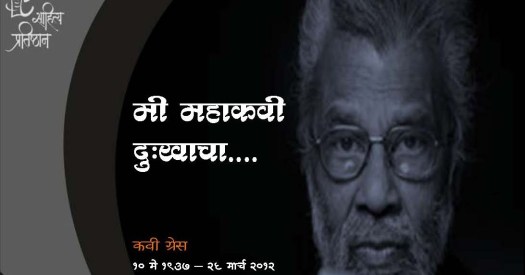
Let me end with another tour-de-force from Kavi Grace:
मी महाकवी दुःखाचा, प्राचीन नदी परी खोल / दगडाचे माझ्या हाती, वेगाने होते फूल ( I am the epic poet of sorrow, As deep as the old river/ A Stone in my hand, rapidly becomes a flower)
So Keep the Faith, and Fight on: vikas

PS : enjoy Hridaynath Mangeshkar’s rendition of this poem at https://youtu.be/XPvYswSrGmY?si=nkGMgDp7EICJpUnK
 Vikasblog
Read this today morning. Quite a ride – Free flowing – opening up so many thought processes. Thought about which part of a particular poem had lingered with me and why. Often wondered if that line meant the same to others but never bothered to ask….Saw that something else had appealed to you more…. Set me thinking why…
I have to revisit some of the poems…..Promise to come back with more of my thoughts.
LikeLike
Ravi
that is the beauty of good poetry
it is always dependent on interpretation
and there are various levels to it , just like a great painting
It begins with the title itself
Vinita interpreted that the “ghar” Grace refers to is the body
Ghar thaklele mhanun Sanyasi …virakta zhale
With age, Bhinti Khachlya
my take was diffrent as preseted in the blog
Have read somewhere
as you go through life
the questions remain the same
but the answers keep changing
what a lovely perspective on life’s dynamicity
LikeLike
Lovely blog. And yes while I agree that there is nothing as entrancing as sorrow – as Shelley has pointed out: our sweetest songs are those that tell of saddest thought – I equally believe that life offers us only as much as we can handle as pushes us to try our limits and so I take courage from Karandikar’s ‘Kana’ – tumhi fakt ladh mhana. I hear our parents saying it to me all the time and that’s what keeps me going. So yes Vikas fight on and write on…. Dono mein hum tumhare saath hai!
LikeLike
Preeti
Thanks for your comment
Your remembering our parents is indeed appropriate as it was their love for literature n music which got imbibed by all of us.
Even as a convent English medium student they instilled the love of Vi Sa Khandekar, Ranjit Desai, Pu La n the glorious poets of Marathi. Great time to pay obeisance to their moulding n parentage
While optimism n positive outlook is imp I have by nature always preferred the half full glass interpretation. I cannot shake off negativity n dark clips. Possibly that is why I love kavi Grace’ work Despite being fortunate n lived I prefer the shadows n solitude. To each his own…
LikeLike
Very beautiful and evocative, Vikas. I have not had the privilege of reading his works, nor the translations but could feel the tugging in the heart from your writings. Sorrow is inescapable and real and we have no place to hide from it. So much of what we are comes from where we were, I guess. And that is another choice that we make. Are we stifled by the past or look to the possibilities ahead? Is the past an anchor or a dead weight? I think it was Grouch Marx who to whom a comment was made that” life is tough” and his response was said to be” compared to what?” Melancholy and optimism are , I guess, two sides of the same coin.
LikeLike
Beautifully put VJ in your characteristic style. Unfortunately even in Marathi speakers Kave Grace was not wildly popular and was considered “clishta”…difficult to interpret. So I am not aware of any books of translations of this great poet. Brooding eyes, deep sonorous voice n “pragalbha” deep n serious were his characteristics. But he left a great body of work.
Thanks for your encouragement of my effort to interpret Kavi Grace.
You are right melancholy n optimism are two sides of the coin. The skill lies in not letting it become a dead weight but rather a float to pilot you through the buffeting waves of fate
Thanks dear friend for your words of encouragement and wisdom
LikeLiked by 1 person
Deeply philosophical. It was initially difficult but gradually it did sink in. Actually a couple of personal reflections of yours helped. When I deep dive myself I tend to believe that this sadness or a state of sadness will be universal – it touches everybody . Many would not realize/accept since it resides in our deep subconscious mind and until the triggering event happens it is carefully hidden by us since who would have the courage to declare it publicly? – a few takers to admit publicly like Kavi Grace that “मी महाकवी दुःखाचा, प्राचीन नदी परी खोल” he in fact I feel mentioned the “subconscious mind” indicating प्राचीन नदी परी खोल? I see also this fear of facing a sorrowful state strongly interlinks the fear to face challenges in the path of growth – encountering such sadness in the event of failure and losing the comfort zone . Not knowing much about Kavi Grace and his personal life I find a space for him somewhere in my heart I feel at the end. Great post sir. 🙏
LikeLike
Sir, also to add here that I was moved by the post so much that I read it not once but at least 3-4 times and through the reflections of yours I could connect myself to the underlying feelings of the poet. Thanks for writing and enlightening us in your very unique style. 🙏
LikeLike
Thanks a ton Kabir. Yes Grace does require re reading to get to the depth of his expression. Thanks for taking the effort
LikeLike
Kabir you have caught the essence of the poem n what I was trying to explain
Indeed the sadness n melancholy is universal n yet at the same time very personal experience. There are few who can lay their heart bare like Kavi Grace n through their words create that experience for the readers.
Grace was often considered very abstruse n difficult to follow But with sensitivity his words unravel a whole new universe airhead of you.
Great that you took the effort to get ubder the spoken words n understood the essence
LikeLike
Truly, one must confront challenges rather than avoiding them. That is the stronger and confident way to close wounds that fester. Beautifully brought out, as usual.
LikeLiked by 1 person
Col saab
others lives often act as inspiration and lighthouses to show us the path
thanks for your support, as always
LikeLike
You have made the complex writings of Kavi Grace so simple in this blog! And interspersed them with your personal experiences and analogies so it’s become more relatable.
Wonderful start to the New Year! Keep writing!
LikeLike
Praju bless you my dear. The poem did soark many personal reflections in me. The attempt was to create the same questions for the reader. So happy you feel I have done justice to Kavi Grace and his monumental “pratibha”
LikeLike