

“Life is a festival only to the wise” said Emerson. So how would he have characterized the recently concluded Dashera? A festival that celebrates the victory of Good over Evil. Supposed to commemorate Lord Shri Ram’s win over Ravana. Ram was known as purushottam (the best amongst men). But Ravana also has his followers. In fact in some geographies Ravana is worshipped as the Hero & Ram as the aggressor. And yet every year we have a Ravana Dahan…burning of the effigy of Ravana. 24th Oct 2023 history was made at Delhi Ram Leela Grounds when first time in history a woman…Kangana Ranaut, a Bollywood actress, was given the privilege of shooting the arrow into the Ravana Effigy. But was Ravana really evil? Was Ram the epitome of correctness? Questions, Questions, Questions, all sans definitive answers!

I have always wondered what thoughts must have crossed Shri Ram’s mind when his Father announced a 14 years exile for him, just when he was about to ascend the throne. Obviously Ram had a control on his thoughts & emotions, so much so that he resisted all efforts by friends & brethren to dissuade him from going into the forest. There is no rancor towards the father, who sentenced him to exile, nor to the step-mother, who machinated this turn of events for own gain. With complete equanimity, Ram made preparations to leave the palace & stay in the forest. He goes to say good-bye to his wife and Sita retorts (as per Ga Di Madgulkar) निरोप कसला माझा घेता जेथे राघव तेथे सीता ( How can you say Goodbye to me, Wherever Ram is, Sita will be there). Lakshman the devoted younger brother, without questions decides to follow Ram & Sita into the forest to protect them.

But still, to me, the real Hero of this whole episode is Lakshman’s wife, Urmila. Though unsung and unknown, hers was the biggest sacrifice. Ram followed his father’s wish, Sita followed Ram and had his companionship; Lakshman followed Ram as he thought it is his duty. But what about Urmila? What had she done to deserve the separation from Lakshman? What would have gone through her mind when she saw Lakshman following Ram into the forest? How did she reconcile with her lonely fate and still retain devotion to Ram, Sita & her own husband Lakshman.
Buddha said.” All that we are is a result of what we have thought” He might as well have added, ” And all we shall become is a result of what we think now”. I am reminded of James Allen’s As a Man Thinketh: a self help book, published in 1903. It was described by Allen as “… dealing with the power of thought, and particularly with the use and application of thought to happy and beautiful issues.” A simple book, that all can easily grasp and follow its teaching, and put into practice the methods which it advises. It shows how, in his own thought-world, each man holds the key to every condition, good or bad, that enters into his life, and that, by working patiently and intelligently upon his thoughts, he may remake his life, and transform his circumstances. While all this sounds logical & correct, how do we understand Urmila’s dilemma of living alone for 14 years? Or that of Lakshman? or Sita for that matter? Or of Ram? to say nothing of Dashrath who agreed to Kaikeyi’s demand. And what about Manthara, who put the evil thought into Kaikeyi’s mind to ask Dashrath to banish Ram to exile.

I am sure you have walked along the beach, where there are boisterous waves, especially in the East, in the Bay of Bengal. The waves are so large that they play with large logs. Wave after wave carry the log onto the shore. And then roll it back into the sea. The log is unresisting, & following the call of the waves. Sometimes, a huge wave sweeps the log onto the sand. The log may well feel,” I have come here all by myself. And I am going to lie here” But in a few minutes, a rush of water lifts it free again & carries it back into the sea. Is this not very similar to what our life is? Our life, Ram’s life, Sita’s life or even Urmila’s life. We all seem to be at the mercy of forces larger than us. Even lives of great ones seem to have little say in the way life deals with them. They are no different than the log being tossed by the sea. And the log can do nothing but cooperate with the inevitable. It is futile to try to control your future.

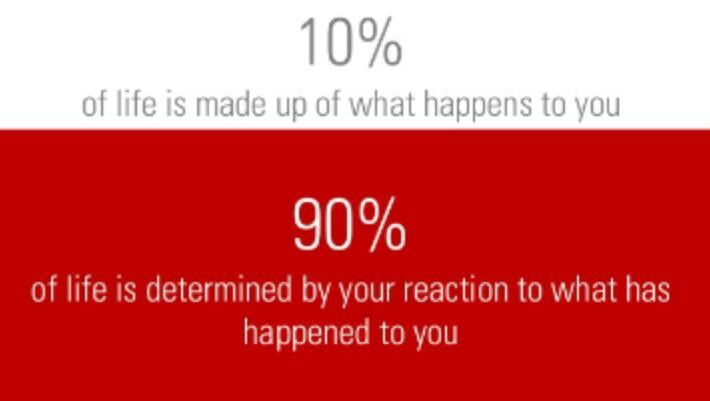
While it is futile to try to control your future, only thing which is in your control is to decide how to react to it. The dealing of the cards is beyond you. but you can still play the hand you are dealt with in the best possible manner. Ram accepted what was dealt to him & actually defended Dashrath & Kaikeyi’s decision. He accepted Sita accompanying him into the forest. He accepted the sacrifice of Lakshman. Rather than mope over what was lost, he coped with the change & found joy in his new situation. He sought to do whatever good he could do & contributed positivity and joy to all lives he touched within the forest.

Buddha left his palace in the search for Nirvana. He left his wife Yashodhara sleeping in their conjugal bed, and crept away in the middle of the night, in his quest. When he got enlightenment, Buddha spent his time teaching the Middle Path. There is an interesting story that he came wandering & teaching back to Kapilavastu & came face to face with Yashodhara. It is said his wife asked him did he have to abandon the wife & child and wander to be enlightened. And Buddha replied to Yashodhara ” No I could have got the same enlightenment staying & meditating in the Palace. But I know this now : after I have left wife & child, the royal Palace & wandered the world.” To me what this shows is that we all, including the Buddha or Ram, are fulfilling one’s own destiny & need to accept that we are logs being buffeted, in the sea of life. It is not for nothing that one of the names of Buddha is Tatha-agata ie “the one who has thus come”.
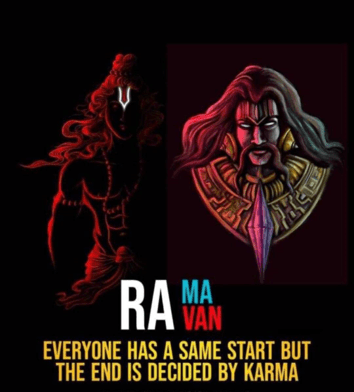
Interesting message I got was RAma & RAvan both have the same start but the end is decided by Karma. Ravan was advised to cease & desist by Bibhishan his brother as well as his wife Mandodari. But he was driven by waves of life. As also Ram or Sita for that matter All the Characters of every great Epic, whether it is Ramayana or Mahabharata or the Persian Kush Nama or the Greek Iliad or Odyssey are all replete with stories of fate & chance buffeting our iconic heroes & leaders in inexplicable ways. Finally, it is all about choices we make & the control we can exercise on our reactions.

Let me end again referring to GaDiMa’s Geet Ramayan
दैवजात दुःखें भरतां दोष ना कुणाचा पराधीन आहे जगतीं पुत्र मानवाचा (Dukkha/Sorrow is fated., no one is to blame…The Son of Man is totally dependent on external forces)
Remember the Scout Motto: “Be Prepared”: vikibaba logger
 Vikasblog