

Nelson Mandela was Positivity & Forgiveness personified. Mandela trained as a lawyer & while working in Johannesburg after qualifying, he became involved in African nationalist politics, joining the ANC in 1943 and co-founding its Youth League in 1944. When apartheid was established in 1948 by the white-only government, the ANC committed themselves to overthrowing it. Mandela’s course was set.
During the 1950s, Mandela was arrested many times for seditious activities & was even unsuccessfully prosecuted for treason in 1956. He was initially committed to non violent protest, but he was influenced by Marxism &, in secret, joined the banned South African Communist Party. In 1961 he led a sabotage campaign against the government. “When a man is denied the right to live the life he believes in, he has no choice but become an outlaw,” Mandela said. In 1962 he was arrested & sentenced to life imprisonment for conspiring to overthrow the state.
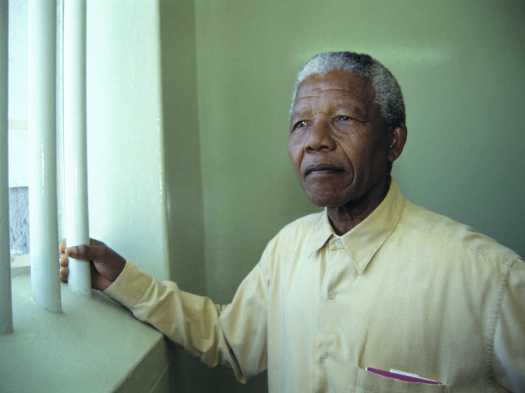
There is no love without forgiveness and there is no forgiveness without love. Nelson Mandela raised his voice against colonialism & was jailed for 27 years for his leadership of the Anti Apartheid movement. After his release he led the African National Congress & became the first Black President of South Africa. The close caucus of Black leaders surrounding Mandela reminded the ANC leadership of all the atrocities the Blacks had suffered through decades of racism & apartheid policies. They swore revenge and giving back to the Whites in the same measure what they had suffered for generations. Nelson Mandela stood up against them and propagated the Rainbow Culture & Rainbow nation theory : promising equality to all South Africans regardless of color, caste or creed. This is classic tale of forgiving and inclusion.
As an Anti Apartheid activist, with leanings to Communism, Mandela was tried by the White government. In the 1964 trial that convicted Mandela & his co-accused, & sent them to prison for life. He made a statement to the packed courthouse, which he repeated on his release in 1990, after 27 years in detention. “ I have fought against white domination, and I have fought against black domination. I have cherished the ideal of a democratic & free society in which all persons live together in harmony & with equal opportunities,” he said. “It is an ideal for which I hope to live for & to see realized. But, my Lord, if needs be, it is an ideal for which I am prepared to die.” What a pronouncement! What a stand!!! No rancor against those who incarcerated him for 27 years. Without blemish or anger, total forgiveness!!
The truth of the ancient Bantu adage umuntu ngumuntu ngabantu (we are people through other people) often came to his mind. And he saw, perhaps clearer than most of his contemporaries, the inevitability of “mutual interdependence” in the human condition, that “the common ground is greater & more enduring than the differences that divide.” He did not argue for a turning back to a glorious African society of bygone times but called for a completely new kind of state, a multiethnic democracy without match, constituted by a manifold of cultures, all having equal rights.
The ANC leadership, reorganized when Mandela was released in 1990 & could officially take on command, consisted of a cross section of races, including seven Indians, seven “Coloureds,” and seven whites. Likewise, & in harmony with this, a broad cultural & political basis marked the government of 1994. Ministers of state were blacks, whites, Indians, Coloureds, Muslims, Christians, communists, liberals, conservatives. Three Indian Muslims, & two Hindus were in Mandela’s government. Never had such a cabinet been seen in Africa or elsewhere. The Sotho maxim “many rills make a big river” often was in Mandela’s mind.
We see how one man’s remarkable life reached its fulfillment & blossomed into a national vision. Inspired by myriad influences, taking the best from both his native heritage, from the example of foreign freedom movements, & even from the history & literature of his oppressors, Nelson Mandela forged a vision of humanity that encompasses all peoples & that sets the hallmark for the rest of the world. Speaking on his release Mandela said, “As I walked out the door toward the gate that would lead to my freedom, I knew if I didn’t leave my hatred and bitterness behind, I’d still be in prison.”
When the Norwegian Nobel Committee decided to award the Nobel Peace Prize for 1993 to Nelson R. Mandela and Frederik Willem de Klerk, it was pointed out that their achievement was made by “looking ahead to South African reconciliation instead of looking back at the deep wounds of the past.” The committee also observed that South Africa has been the very symbol of racially conditioned suppression, & hence the peaceful termination of the apartheid regime “points the way to the peaceful resolution of similar deep-rooted conflicts elsewhere in the world.”. In his Nobel Lecture, Mandela referred to the organic world-view expressed already in the manifesto of 1944, calling himself a mere representative of the millions of people across the globe who “recognized that an injury to one is an injury to all;” which is the essence of ubuntu philosophy, universally applied.
Mandela’s intellectual mentors were diverse and wide ranging. From Mahatma Gandhi & Nehru to Bertrand Russell, he owed an intellectual debt to many. Shakespeare was closely followed & taught at the Robben Island “University.” Free to study classical drama, the prisoners at Robben Island staged a more than two-thousand-year-old Greek tragedy, Antigone by Sophocles, in which earthly power is challenged with reference to a higher law. In that production, which was presented under lock and key, Mandela played the part of Creon, the tyrant. From the British philosopher Bertrand Russell, who had been jailed for his protests against nuclear weapons, Mandela had drawn the arguments of defiance, when conscience & civil laws do not agree. From the Russian novelist and idealist Lev Tolstoy, Mandela got similar support. At times, the prisoners also identified with the endless waiting of the protagonists in Samuel Beckett‘s play Waiting for Godot.
Another source of encouragement was the words of a Victorian English poet, William Ernest Henley (1849-1903).

Decade after decade, the unforgettable lines of the poem Invictus, “unconquerable,” were on Mandela’s lips:
Out of the night that covers me,
Black as the Pit from pole to pole,
I thank whatever gods may be
For my unconquerable soul.
In the fell clutch of circumstance
I have not winced nor cried aloud.
Under the bludgeonings of chance
My head is bloody, but unbowed.
Beyond this place of wrath and tears
Looms but the Horror of the shade,
And yet the menace of the years
Finds, and shall find, me unafraid.
It matters not how strait the gate,
How charged with punishments the scroll,
I am the master of my fate:
I am the captain of my soul.
At Robben Island, Mandela recited this poem and taught other prisoners these defiant lines; reading such words “puts life in you”, Mandela said.

It is perhaps inevitable that the myth of Mandela obscured the man, & there’s not complete consensus on his achievements, but he remains one of the 21st centuries most enigmatic public figures. Let’s let him have the last word: “What counts is not the mere fact that we have lived. It is what difference we have made to the lives of others that will determine the significance of the life we lead.”.
In today’s times, we all can well learn from remembering Mandela and Practicing his forgiveness and positivity: vikas
 Vikasblog
Superb post Vikas. Mandela’s work is stupendous and it must be understood in the context of the history. Forgiveness was the bedrock of his establishing Truth and Reconciliation Commission. Many such commissions were established, but Mandela’s did a great job. It is not just the process but the person behind it makes a huge difference. In our world where hatred is the emotion which we hear from early morning till end of the day, the importance of Mandela becomes even more in our minds. Kudos to you for bringing this out so well. – Vivek
LikeLiked by 1 person
Vivek
thanks for your comments
Indeed Mandela is a supreme example of positive leadership who could turn the tides of history
While there are many examples of this such as Gandhi and Martin Luther King, unfortunately there are equal examples of Osama bin Laden & Hitler and Rasputin who held sway over their followers in a very negative pursuit
as a Psychology student I often wonder whether Leadership will be understood in its absolute “atomic” form so well that positive vibes and waves can get created to alter the state of the world as we see today.
Every 2/3 months when I read about another shooting incident in USA where children are targeted, my heart grieves why this could not have been arrested by identifying such “high risk” profiles before they perpetrate their dastardly acts. Possibly I will not see this answered in my life time. But I do hope for the best
LikeLike
Brilliant. He was rare personality in the modern era full of conflict. His path in part inspired by Gandhi is the only way humanity can survive and prosper together. Forgiveness is the final form of love. This also requires forgetting what happened in past history, ultimate spiritual achievement.
LikeLike
Thanks KK for your comments
Indeed Forgiveness is the ultimate form of love
a child does not hesitate to tell his mother anything because he is confident that the love will overpower any judgment
With Mandelas and Gandhis and ML Kings of the world I still marvel at how they were able to create such a large following whoaccepted the moral compass of the leader and followed the leader sight un seen
if we understand how, I believe this will also help us understand the rabid mind washing of the nazis and other Extremists. Terrorism also has their roots somewhere here
LikeLike
Years back in Atul ,a Gujarati drama called “Mutthi Unchero Manvi” was played. A rough translation would be “ a man ,a ‘fist ‘higher than the rest”. In Nelson Mandela’s life, we saw a man several fists higher ….
His life story of suffering severe hardships and then of the generosity to fully forgive those who were responsible to give him that torture is just unbelievable!
It is one thing for a person himself to forgive ..and quite another to convince one’s followers to do the same. This part of his achievement speaks volumes about his courage of conviction and leadership qualities .
One wonders if there is any chance of we in India learning from this and to forget the past that has divided our society ! I don’t see that as a possibility in my life time…And why blame anyone..i myself have not reached that maturity to forgive !
That makes my reverence for Mandela infinitely higher !
Thanks VS for refreshing the memory of this great legend!
LikeLike
JLS
thanks for your comments
we are together in our appreciation of the Oonchi Mutthero Manas
and also in the acceptance that we individually as well as a society are far away from the vision and maturity required to cement the schisms in our society
I am also most impressed with the “power of one” exemplified by Mandela and Our own Gandhi who by the sheer foce of their personality and courage of their convictions could impress upon large masses to follow their direction. Non violence, non confrontation requires inner strength which transcends the present and stand above all. To get others to also accept that world view and follow you is another cup of tea altogether.
I am reminded by a quote of Einstein in describing Gandhi he said words to the following effect, ” “Generations to come will scarce believe that such a one as this ever in flesh and blood walked upon this earth.”
we are fortunate for such lamp posts
whether we follow their path or not is another story
LikeLike
How sophisticated one’s thinking should be to be able to agree with this! “As I walked out the door toward the gate that would lead to my freedom, I knew if I didn’t leave my hatred and bitterness behind, I’d still be in prison.”
LikeLike
Indeed Hrushi
and that too after spending decades in solitary isolation and doing rigorous labour
Requires a very different mindset
LikeLike
A Very heartfelt and beautiful tribute to Nelson Mandela. Thank you for reminding all of us abut looking ahead instead of the past. In todays society where we are trying to glorify and embrace the past and all that comes with it, we must reflect on what is it that we are really doing. We must acknowledge and accept the past but learn to move on with determination towards a unified vision
LikeLike
VJ
so correct
the past has already taught it’s lessons
now we must face the future and see what it teaches us
LikeLike
Well written blog, as always.
Nelson Mandela and Gandhiji had many things in common but had different views too on many issues.
Nelson Mandela believed more in Unity than in Non-violence while Gandhiji sacrificed unity to Non-violence.
Mandela shared a strong connection with Gandhiji and India and stressed that in a world driven by strife, Gandhiji’s message of peace and non-violence held the key to human survival in the 21st century.
LikeLike
Nilesh ji
Unity was what Nelson Mandela stood for regardless of the counter pressures
right from the early days when the Black movement was fragmented and fractured, here was a voice which never gave up reconciliation
Gandhi unfortunately fell prey to the British and Jinnah and gave us a larger goal of Unity
and we suffer even now for his actions
LikeLike
Incredible story of a great soul. Very wonderfully described.
The essence of life is captured in the following statement.
“What counts is not the mere fact that we have lived. It is what difference we have made to the lives of others that will determine the significance of the life we lead.”.
Profound indeed !
Thanks Vikas for the post.
LikeLike
Jayant
thanks for your comment
indeed he was iconic in his stance and clear in his pronouncements
his vison was always larger than individual goals and he lived his life with that vision
Margaret Thatcher called him a “terrorist”
sad
but does all change not require a “terrorist” streak
look at our Aurobindo or even Ramkrishna Paramhansa
Ramana Maharshi also taught to judge ourselves by our impact on others
LikeLike
This great man had a such strong mind that even after his long solitary confinement, he retained his sanity and wisdom, and stood for his principles. We should all draw inspiration from his life and learn to forgive our adversaries.
Thanks Vikas for bringing out the glimpses of his life.
LikeLike
SDS
indeed true
27 years of hard labor and solitary living did not change his basic stace
He fought against both White supremacy as well as Black domination
his healing touch ensured that there was no genocide after the Black Govt took over reins of SA
it is not for nothing that the Nobel Peace prize was awarded jointly to him and de Klerk
LikeLike
Lovely post. All great leaders and thinkers echo this common streak – service to humankind/others before self and the world is a better place thanks to those few who live by this. A well written blog on an important subject
LikeLike
thanks Preeti
your comment underlines that at a fundamental level we all are united and that is how we can progress
Inclusionand Mutual Understanding above all
LikeLike
Mandela matters as he made a difference. He followed difficult path,rarely travelled.
He banished apartheid and made the world look better.
Thanks Vikas for this exceptional piece of write up.
LikeLike
Thanks Suresh
and what was touching is that he did all this with a healing touch
no anger
no rancor
Forgiving and Moving on were his principles
LikeLike
A noble soul, someone who history will always remember with awe and respect and someone whose life it is almost impossible to emulate. A man who stood like a rock for his ideals and taught people to forget and move on even when treated with contempt. Brilliantly brought out in the blog, thank you for reminding us.
LikeLike
Col saheb
thanks for your comment
There are leaders and icons all around us
But a towering personality like Mandela is a rarity
LikeLike
Thanks Mimi
Just as the medium is the message the personality of Mandela lifted up my expression
Indeed an iconic figure
LikeLike
What a towering human being – a colossus!! So much to learn from him. I understand that he didn’t believe in the benefits of affirmative action…
LikeLike
Ravi thanks for your comment. Indeed a giant amongst men. He had a kot of intellectual differences with other black leaders as was indeed ” colour blind”
LikeLike
So many lessons to be learnt from the life of this great leader. Could visualise and witness his journey through your writing, Vikas Mama. Very well expressed.
LikeLike